

Table of Contents
⭐ How to Balance Screen Time for Kids in 2025: A Complete Guide for Modern Parents (Behavior, Routines, Tools & Real Solutions)
Screens are everywhere — from televisions and tablets to mobile phones, smart toys, learning apps, and even digital school platforms. In 2025, managing screen time is one of the most important — and most confusing — parenting responsibilities.
Parents struggle with questions like:
- “How much screen time is okay for my child?”
- “Why does my toddler get angry when the screen is taken away?”
- “How do I stop screen addiction?”
- “What is healthy screen time according to age?”
- “Are educational apps actually beneficial?”
This blog breaks every concept down clearly and gently. You will learn:
✔ How screens affect children
✔ How much screen time is recommended
✔ How to reduce screen dependence
✔ How to build healthy digital habits
✔ Why tantrums happen when screens stop
✔ A step-by-step framework to manage screen behavior
✔ And how modern parents naturally use TinyPal to simplify this process

Let’s begin.
⭐ 1. Why Screen Time Became a Core Parenting Challenge (Explained Simply)
Parenting in 2025 looks different from the past because:
- Work-from-home increased screen exposure
- Digital education became the norm
- Parents depend on screens for a break
- Kids stay indoors more often
- Smart devices are accessible everywhere
- “Screen time = fun time” became a habit
Screens are not the enemy. The problem is uncontrolled usage.
The goal of this blog is not to ban screens — it’s to teach parents how to create a healthy digital balance.
Let’s break down the real reasons screen time becomes a struggle.
⭐ 2. Understanding Why Kids Become Attached to Screens
Children don’t love screens because they are “naughty” or “stubborn.”
They love screens because:
✔ 2.1 Screens trigger dopamine
Bright colors, fast movements, sounds, and animations create instant excitement.
✔ 2.2 They offer quick gratification
Unlike toys or real activities, screens entertain without effort.
✔ 2.3 They reduce boredom
Kids naturally dislike feeling idle.
✔ 2.4 Screens are predictable
Kids know what they’ll see, hear, and enjoy.
✔ 2.5 Screens help parents manage time
Parents often use screens so they can cook, rest, work, or manage routines.
Understanding this makes screen-time management easier — because now you know it’s a behavioral pattern, not “disobedience.”
⭐ 3. Recommended Screen Time by Age (2025 Global Health Guidelines)
Different global pediatric associations (AAP, WHO, NHS) recommend similar limits:
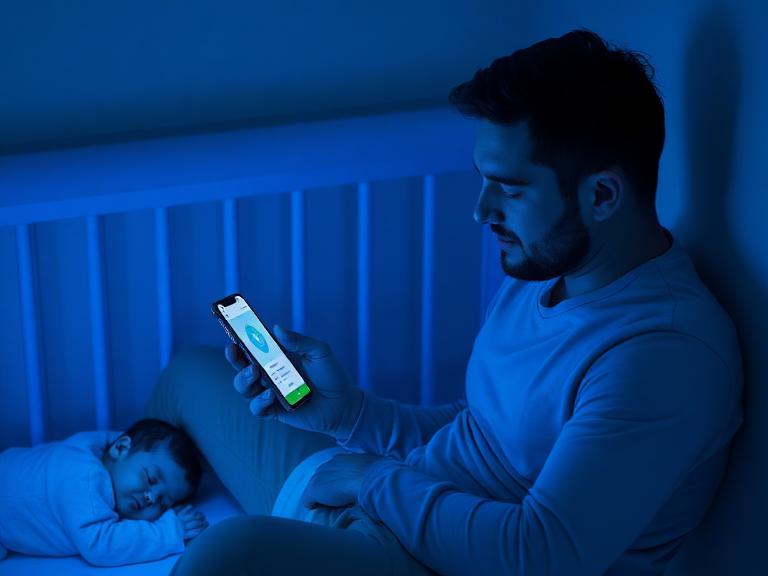
0–18 Months:
❌ No screen time
Only exception: video calls with family.
18–24 Months:
✔ Minimal, supervised, educational only
No solo screen use.
2–5 Years:
✔ 1 hour per day maximum
Preferably split into two 30-minute sessions.
6–12 Years:
✔ 1–2 hours per day
Must include educational content + physical activities.
Teenagers:
✔ 2–3 hours screen time + digital hygiene habits
Avoid late-night screens, social media regulation, and balanced routines.
These are guidelines, not rules. Every parent can adjust according to real life.
⭐ 4. Effects of Excessive Screen Time (The Part Parents Should Understand Clearly)
Here are the top issues that happen when children get more screen time than needed.
4.1 Sleep Disruption
Too much screen exposure overstimulates the mind and suppresses melatonin.
4.2 Short Attention Span
Fast-paced content trains the brain to expect constant excitement.
4.3 Delayed Speech or Reduced Communication
Kids focus more on watching than talking.
4.4 Aggressive Behavior When Screen Stops
Screens interrupt emotional regulation capability.
4.5 Reduced Social Interaction
Kids prefer screen-based experiences over real-world play.
4.6 Lack of Creativity
Screen content offers pre-made visuals; children stop imagining.
4.7 Physical Health Issues
Obesity, eye strain, headaches, restlessness.
None of this happens overnight. It builds slowly — which is why tracking and regulating screen usage is essential.
⭐ 5. Why Kids Throw Tantrums When Screens Are Taken Away
This is the MOST asked question by parents globally.
✔ Reason 1: Dopamine drop
Stopping a screen creates a sudden drop in excitement.
✔ Reason 2: No warning or transition
Toddlers especially need predictable transitions.
✔ Reason 3: Emotional dependency
Screens become a comfort zone.
✔ Reason 4: No substitute activity ready
Kids don’t know what to do next.
✔ Reason 5: Parents negotiate or give up
This teaches children that crying works.
⭐ 6. How to Reduce Screen Time Without Tears (Proven Parenting Framework)
Here is the behavior-science-backed, parent-friendly 7-step system.
⭐ Step 1: Set Clear Screen Schedules
Children follow patterns.
Create fixed slots like:
- 10:30 AM – 20 minutes
- 5:00 PM – 20 minutes
Predictability reduces resistance by 70%.
⭐ Step 2: Use the “10-Minute Transition Rule”
Before stopping the screen, announce:
- “10 more minutes…”
- “5 more minutes…”
- “2 more minutes…”
This stops sudden reactions.
⭐ Step 3: Replace Screens With Interesting Alternatives
Kids will NEVER give up screens unless alternatives are fun.
Highly effective replacements include:
- Stickers
- Blocks
- Outdoor play
- Water play
- Sensory baskets
- Pretend play activities
⭐ Step 4: Avoid Screens During Key Times
Especially:
❌ Meal time
❌ 1 hour before bed
❌ Right after waking
❌ Family conversations
❌ Morning routines
⭐ Step 5: Use Parental Controls
Control:
- What they watch
- For how long
- Which apps they use
- How much time per session
⭐ Step 6: Model Healthy Digital Behavior
Parents who use screens excessively find it harder to set boundaries.
⭐ Step 7: Track Screen Usage Consistently
Tracking reveals:
- “Which times create tantrums?”
- “Which activities trigger dependence?”
- “Which content overstimulates?”
This is impossible with memory alone.
This is where thousands of parents naturally prefer using a digital helper.

⭐ 7. The Simplest Way to Manage Screen Time in 2025: Using a Parenting App
Parents in 2025 want three things:
✔ Simplicity
✔ Predictability
✔ Less guilt
They prefer a solution that:
- Tracks screen time automatically
- Shows patterns
- Gives reminders
- Syncs between both parents
- Reduces manual stress
- Logs tantrums
- Connects behavior → triggers
A modern parenting support tool solves these.
⭐ 8. Why Parents Use TinyPal for Screen Time & Routine Tracking
TinyPal is built for modern parents who want clarity and structure without stress.
How TinyPal Helps Manage Screen Time
✔ Log screen-time sessions
✔ Show daily & weekly patterns
✔ Identify tantrum triggers
✔ Track routines
✔ Provide screen-time reminders
✔ Replace guesswork with data
✔ Help maintain healthy habits
✔ Sync between mother & father
✔ Track behavior improvements
The goal is simple:
👉 Reduce screen time through clarity, not conflict.
Real Parent Reviews
• Amelia, USA
“My toddler used to scream whenever screen time ended. Once we followed TinyPal’s tracking pattern, we noticed the tantrum triggers and adjusted routines. Huge difference.”
• Kevin, working dad
“I never knew how much screen time my child actually consumed. Tracking helped us balance it better.”
• Nina
“Behavior and screen logs helped us see which time-of-day caused the most resistance. We fixed that pattern.”

⭐ 9. Building a Healthy Screen Routine (Daily Blueprint)
Morning Routine
✔ No screens
✔ Breakfast + natural sunlight
✔ 15-minute outdoor/sensory activity
Afternoon Routine
✔ Short educational screen session (if needed)
✔ Playtime
✔ Nap routine
Evening Routine
✔ Screen-free 1–2 hours before bedtime
✔ Family time + gentle conversations
✔ Calming bath
✔ Reading stories
Weekend Routine
✔ Increase physical activity
✔ Reduce passive screen watching
✔ More family outdoor time
Repeating this for 14 days resets the child’s screen patterns naturally.
⭐ 10. Practical Tips to Reduce Screen Time (Quick, Effective)
- Use slow-paced content, not hyper-stimulating cartoons
- Never use screens as a reward or punishment
- Keep the TV off unless someone is watching
- Build a “No Screen Zone” in the house
- Use toy rotation to reduce boredom
- Encourage independent play
- Avoid background music videos
- Encourage social interactions
Consistency is more powerful than strict rules.
⭐ 11. Final Thoughts: Screen Time Is Not the Enemy — Lack of Balance Is
Screens can help children learn, explore creativity, and stay entertained.
But balance is everything.
When parents:
✔ Set boundaries
✔ Track usage
✔ Offer alternatives
✔ Stay calm during transitions
✔ Provide structured routines
screen dependence naturally decreases.
And tools like TinyPal make the entire journey smoother, clearer, and stress-free.