Table of Contents
Professional Electric Vehicle Charger Installation Guide: 2026 Home & Commercial Blueprint
The rapid evolution of the electric vehicle (EV) sector is redefining how vehicles are fueled. Instead of relying entirely on centralized public fueling networks, the core infrastructure is shifting directly to residential garages, corporate parking lots, and multi-family housing complexes. This makes a certified electric vehicle charger installation an essential addition to modern properties, turning standard parking spaces into smart power hubs.
Charging an EV involves managing a sustained high-amperage draw that puts more stress on an electrical system than almost any regular household appliance. Ensuring a safe, efficient, and long-lasting installation requires looking closely at load calculations, circuit protection codes, structural wire routing, and smart charging configurations. This guide outlines the detailed technical steps, 2026 regulatory updates, and financial factors required to execute a high-performance EV charging project.
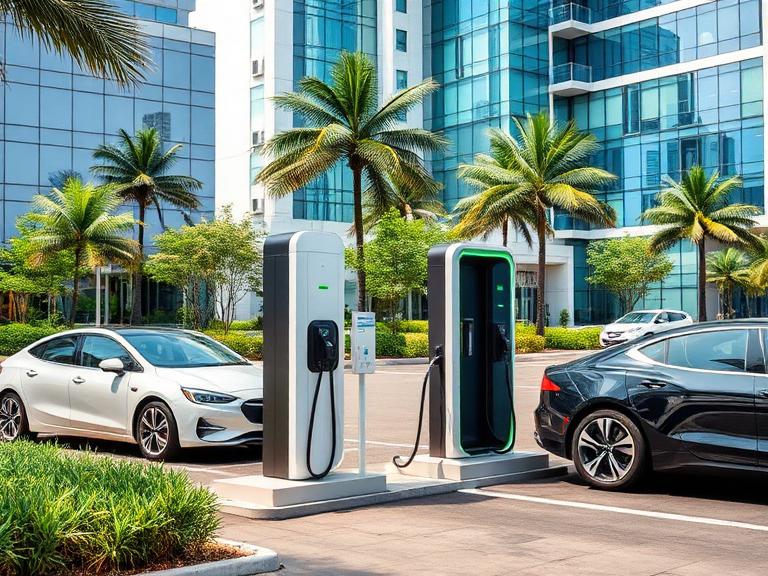
2. EVSE Classification Architecture: Levels, Speeds, and Power Systems
Electric Vehicle Supply Equipment (EVSE) is classified into three primary tiers based on electrical input requirements, internal charger hardware capabilities, and real-world deployment scenarios.
Level 1 Charging: Basic Auxiliary Power (1.2 kW – 2.4 kW)
Level 1 infrastructure serves as an entry-level charging solution, typically utilizing a portable charging adapter connected to a standard grounded 120V AC household outlet.
- Electrical Infrastructure: Connects to a standard 15A or 20A single-phase branch circuit.
- Energy Delivery: Supplies between 1.2 kW and 2.4 kW of continuous AC power.
- Charging Velocity: Adds roughly 3 to 5 miles of range per hour. A full charge for a standard 60 kWh battery requires 24 to 40 hours.
- Best Used For: Low-daily-mileage drivers, plug-in hybrids (PHEVs), or temporary backup charging situations.
Level 2 Charging: High-Efficiency Dedicated Systems (7.2 kW – 22.0 kW)
Level 2 wallboxes serve as the standard choice for residential garages, multi-family properties, and workplace parking structures.
- Electrical Infrastructure: Operates on a dedicated 240V single-phase grid supply (common in North America) or a 400V three-phase configuration (standard across Europe and India).
- Energy Delivery: Delivers 7.2 kW to 11.5 kW on single-phase lines (at 32A to 48A draw) and scales up to 22.0 kW on commercial three-phase setups.
- Charging Velocity: Adds between 25 and 60 miles of range per hour. A standard 60 kWh battery pack charges from 10% to 100% in 5 to 8 hours.
- Best Used For: Permanent home installations, workplace fleets, and overnight charging layouts.
DC Fast Charging (DCFC): Industrial Level 3 Hubs (50 kW – 350 kW+)
DC Fast Chargers bypass the vehicle’s lower-capacity internal AC-to-DC converter, feeding high-voltage direct current straight to the battery pack.
- Electrical Infrastructure: Requires a commercial 480V three-phase industrial grid connection, a dedicated distribution transformer, and advanced switchgear.
- Energy Delivery: Ranges from 50 kW to ultra-high-speed outputs of 350 kW or higher.
- Charging Velocity: Replenishes 80% of a vehicle’s battery capacity in 15 to 45 minutes, making it ideal for highway corridors.
- Best Used For: Commercial highway rest stops, rapid fleet hubs, and busy urban charging plazas.
3. Engineering Calculations & Thermal Load Planning
An EV charger is classified as a continuous load under major electrical codes like the National Electrical Code (NEC). This status means the device can draw its full rated current continuously for three hours or longer.
The 125% Breaker Sizing Rule
To account for sustained thermal buildup within electrical panels, circuit breakers and supply conductors must be sized to handle at least 125% of the charger’s maximum current output.
Continuous Amperage Rating x 1.25 = Minimum Required Circuit Breaker Size
For example, a standard 40A Level 2 wallbox requires a dedicated 50A breaker:
$$\text{40A} \times 1.25 = \text{50A Breaker Requirement}$$
Similarly, a high-output 48A wallbox requires a 60A circuit breaker:
$$\text{48A} \times 1.25 = \text{60A Breaker Requirement}$$
Electrical Panel Headroom and Load Calculations
Before running new lines, installers must perform a formal residential load calculation to verify the property’s electrical system has enough capacity.
$$\text{Total Connected Load} = \text{General Lighting Load} + \text{Fixed Appliance Loads} + \text{HVAC Continuous Demand}$$
$$\text{Available Panel Headroom} = \text{Main Service Breaker Capacity} – \text{Total Connected Load}$$
If your home’s main electrical service is rated for 100A, and your calculated peak household load (from air conditioning, ovens, and dryers) sits at 75A, the remaining headroom is only 25A. Attempting to add a 40A EV charger directly to this panel will overload the main service breaker during peak usage times. This requires either an electrical panel upgrade to 200A or the integration of a smart load management system.
4. Hardware Selection & Installation Cost Matrix
The total cost of an installation depends on the selected charger hardware, site layout, and any necessary infrastructure upgrades. The matrix below provides realistic 2026 cost estimates across common residential and commercial installation configurations:
| Installation Configuration | Electrical System Input | Necessary Protection Spares | Hardware Sourcing Cost | Total Labor & Material Cost |
| Grounded Smart Industrial Outlet | 240V Single-Phase, Dedicated 20A Circuit | 25A Type-C Breaker, GFCI Device, 12 AWG Wire | $200 – $400 | $500 – $850 |
| Standard Single-Family Wallbox | 240V Single-Phase, Dedicated 50A Circuit | 50A Molded Case Breaker, 6 AWG Copper Line | $450 – $800 | $900 – $1,600 |
| Detached Garage / Long Run Install | 240V Single-Phase, Dedicated 60A Subpanel | 60A Breaker, Heavy Conduit, 4 AWG Copper Feeders | $600 – $950 | $1,800 – $3,200+ |
| Commercial Dual-Port Workplace | 480V Three-Phase, Dual 50A Branch Lines | Independent Distribution Subpanel, Dynamic Load Sensors | $2,500 – $5,500 | $4,500 – $9,000+ |
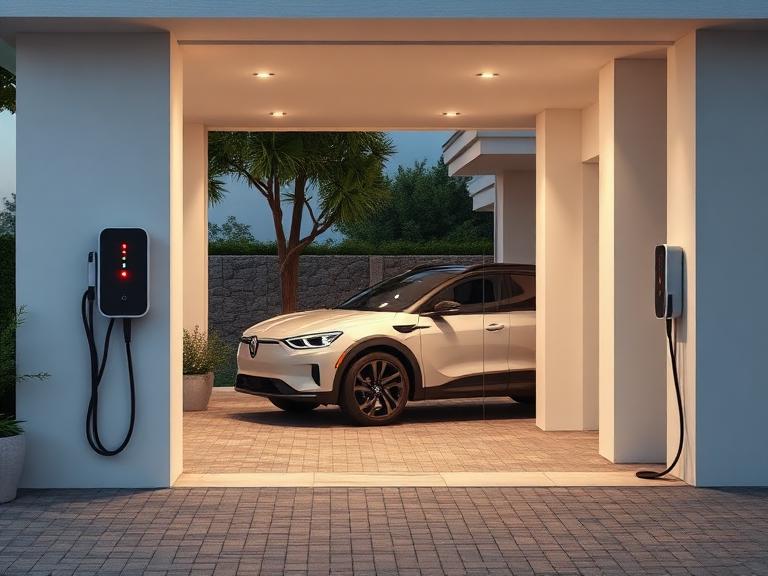
5. Critical Technical Safeguards & 2026 Code Revisions
The 2026 edition of the National Electrical Code (NEC) introduced major safety updates that effectively end the era of uncertified DIY hookups, prioritizing occupant safety and grid stability.
Mandated Qualified Installer Rule (NEC Section 625.4)
The updated code explicitly requires all permanently installed Level 2 or higher charging equipment to be installed by certified, qualified individuals. Most jurisdictions interpret this as a licensed electrician who has graduated from an accredited apprenticeship program or holds a formal validation like the Electric Vehicle Infrastructure Training Program (EVITP).
Strict 5mA Class A GFCI Ground-Fault Limits
Previous iterations allowed built-in Charge Circuit Interruption Devices (CCID-20) with a 20mA trip threshold to serve as the main ground fault defense. The updated 2026 guidelines mandate sensitive 5mA Class A GFCI protection across all standard EV charging circuits. This shift requires installers to keep wire runs clean and dry to minimize minor moisture-induced leakage that could trigger nuisance trips.
Banning Standard Consumer Receptacles for Hardwired EVSE
Due to past issues with standard household NEMA 14-50 outlets degrading under multi-hour high-thermal loads, the updated code prohibits using basic utility outlets for hardwired EV installations. Installers must either hardwire the wallbox directly into a heavy-duty steel junction box or use heavy industrial sockets specifically certified and labeled for high-duty-cycle EV charging use.
6. Dynamic Load Balancing & Smart Grid Integration
Adding high-draw charging infrastructure does not always require an expensive upgrade to your main electrical panel. Modern installations use smart energy management systems to optimize available power.
Dynamic Load Balancing (DLB) Mechanics
Dynamic Load Balancing uses split-core Current Transformer (CT) sensors clamped around the building’s main incoming utility lines. These sensors continuously measure the property’s real-time electricity consumption.
Available EV Charging Power = Max Main Service Capacity - Real-time Household Appliance Demand
If the household electricity demand spikes (for example, if a heat pump, electric oven, and clothes dryer turn on at the same time), the CT sensors alert the smart EV wallbox via local data lines. The charger instantly lowers its charging rate to protect the main service fuse. Once the other household appliances turn off, the charger scales back up to its maximum output rate, optimizing charging speeds without overloading the electrical system.
Open Charge Point Protocol (OCPP) & Fleet Integration
For commercial properties and workplace charging pools, deploying hardware that supports OCPP 1.6J or OCPP 2.0.1 is essential. This universal open-source communication protocol links physical charging units to cloud-based management systems. Property managers can track usage data, charge users for electricity, schedule off-peak charging times, and run remote diagnostics across multiple locations from a single dashboard.
7. Step-by-Step Installation Execution Sequence
1.Comprehensive Site Survey & Load Calculations:Phase 1.
Review the property’s main electrical panel to verify existing capacity. Run a full code-compliant load study to determine the available electrical headroom before selecting hardware.
2.Permit Acquisition & Utility Approvals:Phase 2.
File the necessary technical engineering drawings, load analysis documentation, and equipment specifications with the local building department to secure the required electrical permits.
3.Conduit Deployment & Structural Wire Runs:Phase 3.
Install heavy-walled PVC or EMT metal conduit from the electrical panel to the target charging location. Pull properly sized copper conductors (such as 6 AWG or 4 AWG wire) through the conduit run based on the distance and target amperage.
4.Safety Protection Subpanel Assembly:Phase 4.
Mount the dedicated circuit breaker inside the main electrical panel. If needed, set up a dedicated subpanel complete with the required Class A 5mA GFCI breakers and surge protection devices (SPDs).
5.Wallbox Mounting & Line Termination:Phase 5.
Secure the weatherproof EVSE enclosure to the wall surface or a dedicated mounting pedestal column. Strip the supply wires, terminate the electrical connections to the internal terminals, and torque all lugs to factory specifications.
6.Testing, Commissioning, & Configuration:Phase 6.
Energize the circuit and use an EVSE network simulator tool to test the ground safety loop and pilot signaling responses. Connect the unit to the local Wi-Fi network, update the firmware, and confirm stable charging performance with an electric vehicle.
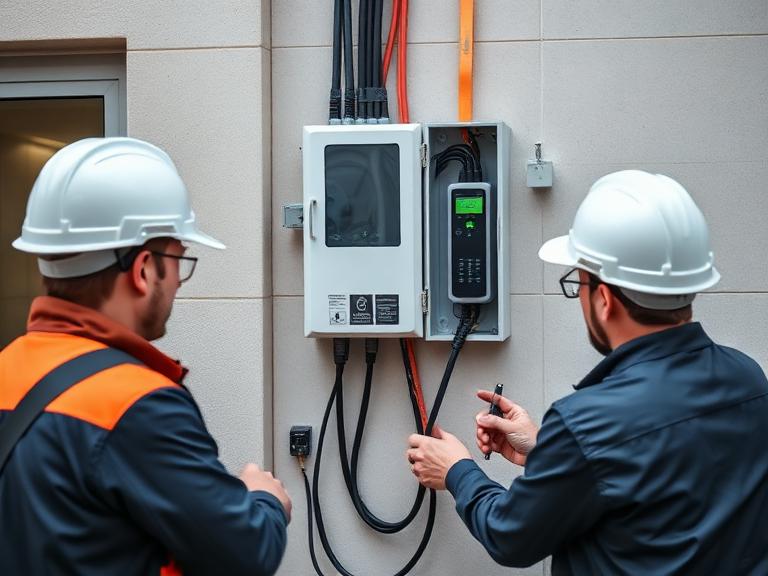
8. Definitive Expert-Led FAQ Vault (15 Critical Operational Questions)
Q1: Can I perform a Level 2 EV charger installation as a DIY project?
No. The updated 2026 National Electrical Code (NEC Section 625.4) mandates that all permanently installed Level 2 or higher charging systems must be installed exclusively by certified, qualified electrical professionals. Attempting a DIY installation can violate local building codes, void your equipment warranty, and lead to insurance claims being denied if an electrical issue occurs.
Q2: How much does a standard residential Level 2 EV charger installation cost?
A standard residential Level 2 installation typically ranges between $900 and $1,600. The total cost depends on the proximity of your charging location to the main electrical panel, the condition of your home’s electrical wiring, and whether your system requires a panel upgrade.
Q3: What is the ideal wire gauge for a 40A EV charger requiring a 50A circuit breaker?
For a standard 50A branch circuit under 100 feet in length, 6 AWG THHN copper wire inside code-approved conduit is the engineering standard. If the cable run covers a longer distance, you may need to step up to 4 AWG copper wire to prevent voltage drop from reducing charging efficiency.
Q4: What exactly is Dynamic Load Balancing, and do I need it?
Dynamic Load Balancing uses smart sensors to monitor your home’s real-time power consumption, automatically adjusting the EV charger’s output to prevent system overloads. It is highly recommended if your electrical panel has limited headroom, allowing you to avoid the high cost of a full electrical panel upgrade.
Q5: How do the 2026 NEC revisions change how EV charging outlets are installed?
The updated 2026 guidelines prohibit using standard consumer-grade NEMA 14-50 receptacles for heavy-duty EV charging. Installers must either hardwire the charging unit directly into a code-compliant junction box or use industrial-grade sockets specifically certified and labeled for continuous high-amperage EV workloads.
Q6: Can I use aluminum wiring to run the supply lines for an EV charging station?
Aluminum wiring is acceptable for long feeder circuits supplying a subpanel, provided you use properly sized conductors (like 4 AWG or 1 AWG aluminum) and code-approved bimetallic lugs. However, the final branch circuit connecting the subpanel or main panel directly to the charger housing should use copper wiring to ensure maximum terminal reliability.
Q7: What is the difference between a hardwired installation and a plug-in setup?
Hardwired installations connect the supply conductors directly to the charger’s internal terminal blocks, creating a highly reliable, weather-sealed connection that can handle up to 48A–80A continuous loads. Plug-in setups connect to an industrial outlet, capping your maximum continuous charging output at 40A under the 80% continuous load safety rule.
Q8: What type of circuit breaker should be installed in the protection subpanel?
The circuit must use a high-quality Molded Case Circuit Breaker (MCCB) rated for continuous duty at 125% of the charger’s peak current draw. Additionally, the circuit must include a dedicated Class A 5mA ground-fault circuit interrupter (GFCI) to comply with modern safety standards.
Q9: How does cold weather affect home EV charging station performance?
Extremely low temperatures increase internal resistance within the vehicle’s battery pack, which can lengthen charging times as the car routes initial power to its thermal management system to warm up the cells. Outdoor charger installations should use rugged, weather-sealed enclosures rated for wide temperature ranges (IP65/IK10 or NEMA 4X) to keep the internal control boards protected.
Q10: Do I need to upgrade my residential utility meter to install an EV charger?
In most standard residential cases, a utility meter upgrade is not required if your home has a modern 200A main service panel. However, if your property runs on an older 60A or 100A service, you will need to coordinate with both a licensed electrician and your local utility company to upgrade the service lines, meter base, and distribution panel.
Q11: What is the optimal target voltage drop for an EV charging circuit?
To maintain peak charging efficiency and prevent energy loss as heat over long wire runs, the circuit should be designed for a voltage drop under 2% to 3% at full continuous load. For long cable runs, stepping up the wire gauge is the best way to keep the voltage drop within safe limits.
Q12: What is OCPP compliance, and why is it important for commercial installations?
The Open Charge Point Protocol (OCPP) is an open-source communication standard that connects physical charging hardware to cloud-based management software. This compliance ensures property owners are not locked into a single proprietary network, allowing them to switch billing systems or management platforms down the road without replacing their physical chargers.
Q13: Can I power a home EV charging station using a residential solar array?
Yes. Modern smart chargers can integrate directly with home solar inverters and energy management systems. You can configure the charger to prioritize using excess solar energy that would otherwise be sent back to the grid, allowing you to charge your vehicle with clean, self-generated power.
Q14: What structural ingress protection (IP) rating is required for outdoor charger installations?
For outdoor installations exposed to rain, snow, and wind-driven dust, the charging unit should hold a minimum rating of IP54 or IP65, or a NEMA 4 rating. These ratings certify that the internal electronics are fully protected against moisture and dust intrusion.
Q15: How do I secure municipal building permits for an EV charger installation?
Your licensed electrical contractor will typically handle the permitting process. They will compile the necessary paperwork—including a completed building application, site layout plans, electrical single-line diagrams, and official panel load calculations—and submit them to your local building department for formal review and approval.
9. Conclusion: Future-Proofing Your Energy Infrastructure
Investing in a professional electric vehicle charger installation is a practical, high-value upgrade that supports the long-term usability of your property. By working with certified professionals, sizing your circuits to handle continuous thermal loads, and following the latest safety codes, you ensure your charging setup operates safely and efficiently for years to come.
Integrating smart features like dynamic load balancing and solar connectivity helps optimize your energy use and keeps your property ready for the next generation of clean e-mobility solutions.