Table of Contents
EV Charging for Businesses in Hyderabad | Commercial EV Charging Solutions
EV Charging for Businesses in Hyderabad enables organizations to provide safe, reliable, and convenient charging facilities for employees, customers, visitors, tenants, and commercial fleets. By investing in scalable EV charging infrastructure, businesses can support sustainable transportation, enhance customer experience, improve workplace amenities, and prepare for the growing adoption of electric vehicles.
Hyderabad has become one of India’s fastest-growing business and technology hubs, attracting multinational companies, startups, industrial enterprises, commercial real estate developers, and retail businesses. At the same time, the city is witnessing rapid growth in electric vehicle (EV) adoption, driven by increasing environmental awareness, improved vehicle availability, and expanding charging infrastructure.
As more employees, customers, and fleet operators transition to electric mobility, businesses have an opportunity to support this change by offering convenient EV charging facilities. Whether installed at office campuses, hotels, shopping malls, hospitals, educational institutions, industrial parks, or commercial complexes, EV charging infrastructure has evolved from a value-added amenity into an increasingly important business investment.
Professional EV Charging for Businesses in Hyderabad helps organizations meet current mobility needs while preparing for the future of sustainable transportation.
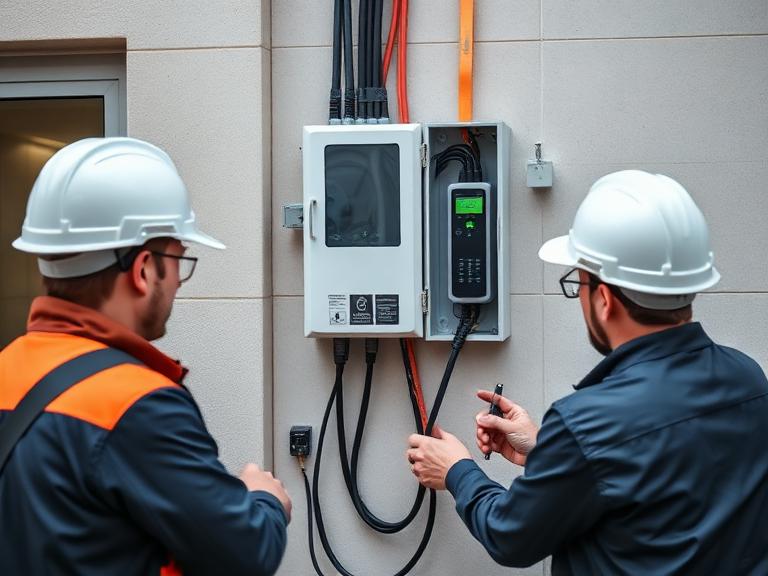
Why Businesses Should Invest in EV Charging
Electric mobility is transforming how organizations approach transportation, sustainability, and customer engagement.
Installing commercial EV charging infrastructure provides numerous strategic advantages beyond simply supplying electricity to vehicles.
Meeting Growing Customer Expectations
Consumers increasingly prefer businesses that support sustainable practices and offer convenient amenities.
Providing EV charging allows customers to recharge their vehicles while:
- Shopping
- Dining
- Working
- Attending meetings
- Visiting healthcare facilities
- Staying at hotels
- Participating in events
This convenience enhances the overall customer experience.
Supporting Employee Mobility
Many professionals now commute using electric vehicles.
Workplace charging enables employees to:
- Charge during office hours
- Reduce dependence on public chargers
- Improve commuting convenience
- Increase confidence in EV ownership
Organizations that provide charging facilities demonstrate their commitment to employee well-being and sustainability.
Strengthening Sustainability Initiatives
Environmental responsibility has become an important priority for businesses across industries.
Commercial EV charging contributes to sustainability goals by supporting cleaner transportation and reducing reliance on conventional fossil fuels.
Organizations can integrate EV charging into broader environmental, social, and governance (ESG) strategies.
Preparing for Future EV Growth
Electric vehicle adoption is expected to continue increasing over the coming years.
Businesses that invest in charging infrastructure today position themselves to meet future demand while avoiding rushed infrastructure upgrades later.
Planning for scalability ensures charging systems can expand as vehicle numbers grow.
What is Commercial EV Charging?
Commercial EV charging refers to charging infrastructure designed specifically for business environments rather than individual residential use.
Commercial charging solutions typically include:
- Multiple charging points
- Smart charging software
- User authentication
- Energy monitoring
- Load balancing
- Remote diagnostics
- Billing systems
- Fleet management integration
- Preventive maintenance
Unlike residential charging, commercial installations often support numerous users simultaneously while maintaining efficient power distribution.
Businesses That Benefit from EV Charging
Commercial EV charging solutions are suitable across a wide range of industries.
Corporate Offices
Modern office buildings increasingly provide charging facilities for employees and visitors.
Benefits include:
- Improved employee satisfaction
- Sustainable workplace initiatives
- Enhanced corporate image
- Attraction of environmentally conscious talent
IT Parks
Hyderabad’s technology sector continues to expand, making workplace EV charging increasingly valuable for software companies and technology campuses.
Charging infrastructure supports employees while reinforcing organizational sustainability goals.
Shopping Malls
Retail destinations benefit significantly from EV charging because customers typically remain on-site for extended periods.
Advantages include:
- Increased visitor convenience
- Longer shopping duration
- Improved customer loyalty
- Enhanced property value
Hotels and Resorts
Hotels can attract EV-driving guests by offering convenient charging during overnight stays.
Charging facilities improve guest satisfaction while supporting sustainable hospitality practices.
Hospitals
Healthcare facilities serve patients, visitors, and employees throughout the day.
Providing EV charging improves accessibility while supporting environmentally responsible transportation.
Educational Institutions
Universities, colleges, and educational campuses can encourage sustainable commuting by installing EV charging infrastructure for faculty, students, and visitors.
Industrial Parks
Manufacturing facilities and industrial campuses increasingly require charging solutions for employee vehicles, company fleets, and logistics operations.
Logistics Companies
Fleet operators transitioning toward electric delivery vehicles require dependable charging infrastructure capable of supporting daily operational requirements.
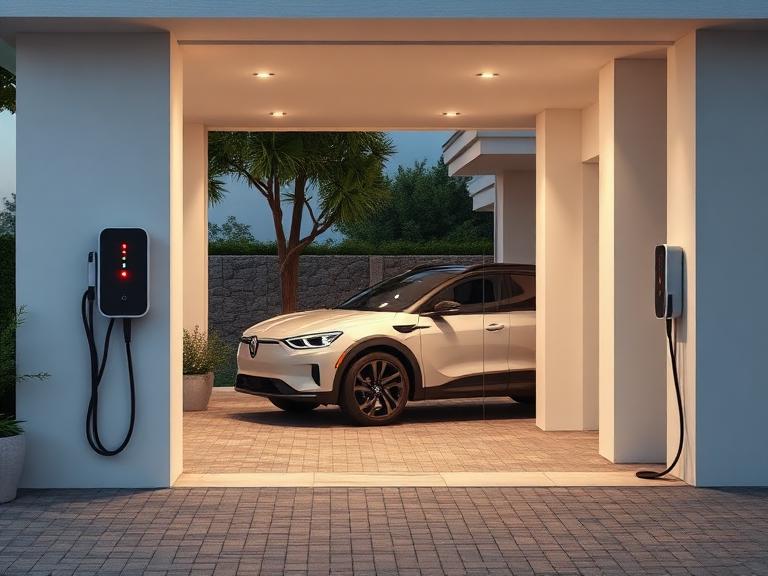
Types of EV Charging Solutions for Businesses
Commercial charging infrastructure can be customized according to operational needs.
Workplace Charging
Designed primarily for employee vehicles during working hours.
Suitable for:
- Corporate offices
- Government offices
- IT parks
- Business campuses
Benefits include:
- Employee convenience
- Predictable charging schedules
- Better parking management
- Support for EV adoption
Customer Charging
Retail businesses can provide charging facilities for customers during shopping or service visits.
Suitable locations include:
- Shopping malls
- Restaurants
- Hotels
- Entertainment centers
- Service stations
Customer charging enhances convenience while encouraging longer visits.
Fleet Charging
Organizations operating electric vehicle fleets require charging systems capable of supporting multiple vehicles efficiently.
Fleet charging infrastructure often includes:
- Scheduled charging
- Energy management
- Load balancing
- Fleet monitoring
- Charging analytics
- Remote management
Destination Charging
Destination charging refers to charging facilities located where visitors naturally spend time.
Examples include:
- Hotels
- Tourist attractions
- Convention centers
- Business centers
- Hospitals
- Educational campuses
Destination charging improves visitor experience while increasing charging accessibility.
AC vs DC Charging for Businesses
Selecting the appropriate charging technology depends on business requirements.
| Feature | AC Chargers | DC Fast Chargers |
|---|---|---|
| Charging Speed | Moderate | Very Fast |
| Installation Cost | Lower | Higher |
| Suitable For | Offices, Hotels, Apartments | Fleets, Public Charging, Highways |
| Daily Charging | Excellent | Excellent |
| Vehicle Turnover | Moderate | High |
| Infrastructure Requirement | Standard | High Capacity |
Many organizations combine both charger types to accommodate different user requirements.
Features of Modern Commercial EV Charging
Business charging infrastructure increasingly incorporates advanced digital technologies.
Popular features include:
- Mobile application support
- RFID authentication
- QR code activation
- Remote monitoring
- Cloud-based management
- Smart energy management
- Dynamic load balancing
- Automated reporting
- Usage analytics
- Access control
- Software updates
- Multi-user management
These capabilities help businesses operate charging stations efficiently while providing a seamless user experience.
Benefits of EV Charging for Businesses
Competitive Advantage
Businesses that offer EV charging differentiate themselves in increasingly competitive markets.
Charging facilities can influence customer and tenant decisions, particularly as EV ownership grows.
Increased Customer Dwell Time
Customers charging their vehicles often spend more time at commercial locations.
Longer visits may contribute to greater engagement with retail stores, restaurants, entertainment venues, and other on-site services.
Improved Property Value
Commercial properties equipped with EV charging infrastructure are increasingly viewed as future-ready assets.
Charging amenities can improve attractiveness for tenants, investors, and occupants.
Brand Reputation
Organizations demonstrating commitment to sustainable mobility strengthen their reputation among customers, employees, investors, and stakeholders.
Operational Efficiency
Businesses operating electric fleets can improve scheduling, reduce downtime, and optimize energy usage through dedicated charging infrastructure.
Why Professional Planning is Important
Commercial EV charging projects require careful consideration of electrical capacity, parking layouts, user demand, charging technology, and future scalability.
Professional planning helps ensure that infrastructure is safe, efficient, compliant with relevant standards, and capable of supporting long-term business objectives.
Companies such as ZyCharge Energies Pvt. Ltd. provide end-to-end commercial EV charging solutions, including site assessment, charger selection, installation, commissioning, monitoring, and maintenance to help businesses build reliable charging infrastructure tailored to their operational needs.
Planning EV Charging Infrastructure for Businesses
Successful commercial EV charging projects begin with careful planning rather than equipment selection alone. Every business has unique operational requirements, parking layouts, electrical infrastructure, and user expectations. A structured planning process helps ensure the charging solution delivers long-term value while supporting future expansion.
A comprehensive commercial EV charging project generally includes:
- Business requirement analysis
- Site survey
- Electrical load assessment
- Charger selection
- Infrastructure design
- Installation planning
- Testing and commissioning
- User onboarding
- Ongoing maintenance and monitoring
This approach minimizes installation challenges while ensuring reliable day-to-day operation.
Step-by-Step Commercial EV Charging Implementation
Step 1: Site Assessment
The first stage involves evaluating the proposed installation location.
The assessment includes:
- Available parking spaces
- Electrical panel capacity
- Distance from power supply
- Cable routing options
- Network connectivity
- Lighting conditions
- Safety requirements
- Future expansion opportunities
A thorough assessment helps determine the most suitable charging solution for the property.
Step 2: Evaluate Charging Demand
Businesses should estimate current and future charging requirements.
Consider factors such as:
- Number of EV users
- Employee charging demand
- Customer traffic
- Fleet size
- Daily charging frequency
- Peak usage periods
- Planned business expansion
Accurate demand forecasting helps avoid underutilized or overloaded infrastructure.
Step 3: Select the Appropriate Chargers
Choosing the right charging equipment depends on user behavior and operational objectives.
AC Chargers
Recommended for:
- Employee parking
- Hotels
- Apartments
- Educational institutions
- Office campuses
Advantages include:
- Cost-effective installation
- Efficient charging during longer parking periods
- Lower infrastructure requirements
- Suitable for daily charging
DC Fast Chargers
Recommended for:
- Fleet operators
- Commercial charging hubs
- Highway locations
- Public charging stations
- High-turnover commercial properties
Advantages include:
- Rapid charging
- Reduced waiting times
- Higher vehicle throughput
- Support for commercial operations
Step 4: Installation and Commissioning
Professional installation includes:
- Electrical wiring
- Mounting chargers
- Earthing
- Circuit protection
- Network configuration
- Functional testing
- Safety verification
- User training
Proper commissioning ensures the charging system is ready for reliable operation.
Electrical Infrastructure Requirements
Commercial charging projects require careful evaluation of existing electrical infrastructure.
Important considerations include:
- Incoming power supply
- Transformer capacity
- Distribution panels
- Cable sizing
- Circuit breakers
- Earthing systems
- Surge protection
- Electrical safety compliance
If necessary, electrical upgrades should be completed before charger installation.
Smart EV Charging Technologies
Modern commercial charging systems integrate intelligent technologies that improve operational efficiency.
Common smart features include:
- Cloud-based management
- Mobile app integration
- RFID authentication
- QR code activation
- User access control
- Load balancing
- Energy monitoring
- Remote diagnostics
- Automatic software updates
- Usage analytics
- Billing and payment integration
These capabilities simplify charger management while improving the user experience.
Workplace EV Charging Strategies
Employee charging is becoming an important workplace amenity.
Effective workplace charging strategies include:
Scheduled Charging
Charging sessions can be distributed throughout the workday to maximize charger availability.
Shared Charging
Multiple employees can access shared charging infrastructure using reservation systems or access controls.
Priority Access
Organizations may assign charging priority to company vehicles, visitors, or employees based on operational requirements.
Energy Optimization
Smart charging systems help balance electricity demand during peak operating hours.
Fleet Charging Management
Commercial fleet operators require charging systems that support operational efficiency.
Fleet charging infrastructure may include:
- Overnight charging schedules
- Vehicle prioritization
- Smart charging algorithms
- Fleet monitoring dashboards
- Charging analytics
- Load balancing
- Remote management
- Predictive maintenance
These capabilities help maximize vehicle availability while minimizing energy costs.
Return on Investment (ROI)
Although installing EV charging infrastructure requires an initial investment, businesses often realize long-term value through multiple operational and strategic benefits.
Potential advantages include:
- Enhanced customer experience
- Increased employee satisfaction
- Improved tenant retention
- Future-ready commercial properties
- Support for sustainability initiatives
- Greater operational efficiency for electric fleets
- Competitive market positioning
The overall return depends on factors such as charger utilization, property type, and business objectives.
Cost Factors
Commercial EV charging projects vary in scope and complexity.
Several factors influence installation costs.
| Factor | Impact |
|---|---|
| Charger Type | DC fast chargers generally require higher investment than AC chargers. |
| Number of Chargers | Larger deployments involve more equipment and installation work. |
| Electrical Upgrades | Additional infrastructure may be required for high-capacity charging. |
| Cable Length | Longer cable routes increase installation requirements. |
| Civil Works | Foundations, trenching, and protective structures may be necessary. |
| Smart Software | Advanced monitoring and management systems may affect project costs. |
| Future Expansion | Designing for scalability can influence initial planning and infrastructure. |
A professional site survey provides the most accurate estimate based on project requirements.
Common Challenges and Solutions
Limited Electrical Capacity
Some commercial properties may have insufficient electrical capacity for multiple chargers.
Solution:
Implement load balancing, energy management systems, or electrical upgrades where appropriate.
Parking Layout Constraints
Available parking configurations may limit charger placement.
Solution:
Optimize charger locations to maximize accessibility while maintaining efficient traffic flow.
Peak Electricity Demand
Simultaneous charging by multiple vehicles may increase peak electrical demand.
Solution:
Smart charging software distributes available power efficiently across connected chargers.
Future Expansion
Business requirements often evolve over time.
Solution:
Install scalable infrastructure with provisions for additional charging points as EV adoption increases.
Preventive Maintenance
Routine maintenance helps ensure reliable charger performance while reducing unexpected downtime.
Maintenance activities typically include:
- Visual inspections
- Electrical testing
- Connector inspection
- Cable condition checks
- Cleaning charging equipment
- Software updates
- Network diagnostics
- Safety verification
- Performance testing
- Replacement of worn components
Preventive maintenance supports long-term reliability and user satisfaction.
Best Practices for Businesses
Organizations planning EV charging infrastructure should consider the following recommendations:
- Conduct a detailed site assessment before installation.
- Estimate future EV demand rather than current demand alone.
- Select chargers appropriate for expected user behavior.
- Prioritize safety and electrical compliance.
- Incorporate smart charging technologies.
- Design infrastructure for future expansion.
- Schedule preventive maintenance.
- Monitor charger utilization and performance.
- Educate employees and users about charging etiquette.
- Review charging infrastructure periodically as business needs evolve.
Future Trends in Commercial EV Charging
Commercial EV charging continues to evolve alongside advances in electric mobility.
Key trends include:
- Higher-power charging systems
- Smart energy management
- Renewable energy integration
- Battery energy storage
- AI-assisted charging optimization
- Vehicle-to-Grid (V2G) technology
- Wireless charging research
- Unified charging networks
- Fleet electrification
- Increased interoperability between charging platforms
Businesses adopting scalable infrastructure today will be better positioned to take advantage of these future developments.
Why Choose ZyCharge Energies Pvt. Ltd.
Implementing commercial EV charging infrastructure requires expertise in electrical systems, charger technology, safety standards, and long-term operations.
ZyCharge Energies Pvt. Ltd. provides comprehensive EV charging solutions for businesses across Hyderabad, including AC EV chargers, DC fast chargers, EV charging station setup, Charge Point Operator (CPO) services, installation, commissioning, preventive maintenance, and customized charging infrastructure for offices, commercial complexes, hotels, hospitals, industries, residential communities, and fleet operators. By focusing on quality, scalability, and operational efficiency, ZyCharge helps businesses build charging solutions that are ready for the future of electric mobility.
Frequently Asked Questions
1. Why should businesses install EV charging stations?
EV charging stations support employees, customers, visitors, and fleets while helping businesses prepare for increasing EV adoption and sustainability initiatives.
2. Which businesses benefit most from EV charging?
Corporate offices, shopping malls, hotels, hospitals, educational institutions, industrial parks, logistics companies, residential communities, and commercial real estate developments can all benefit.
3. Should businesses choose AC or DC chargers?
The choice depends on expected charging duration, user requirements, available electrical capacity, and operational objectives. Many businesses install a combination of both.
4. Can charging infrastructure be expanded later?
Yes. Properly planned commercial charging systems can be designed to accommodate future expansion.
5. Do commercial EV chargers require maintenance?
Yes. Routine inspections, software updates, electrical testing, and preventive maintenance help maintain safe and reliable operation.
6. Can businesses monitor charger usage?
Modern smart charging platforms provide usage reports, energy monitoring, user management, and operational analytics.
7. Are workplace charging stations suitable for employees?
Yes. Workplace charging provides employees with convenient access to charging during working hours and supports electric vehicle adoption.
8. Can fleet operators use commercial charging systems?
Yes. Fleet charging infrastructure can be designed to support multiple vehicles while optimizing charging schedules and energy usage.
9. How long does a commercial EV charging project take?
Project timelines vary depending on site conditions, electrical infrastructure, project size, and installation complexity.
10. Why is professional installation important?
Professional installation helps ensure safety, compliance with applicable standards, reliable performance, and long-term scalability.
Conclusion
As Hyderabad continues to embrace electric mobility, commercial EV charging infrastructure is becoming an increasingly valuable investment for businesses across multiple industries. Whether supporting employees, customers, visitors, tenants, or commercial fleets, well-designed charging solutions improve convenience, strengthen sustainability initiatives, and prepare organizations for the future of transportation.
Professional planning, quality installation, smart energy management, and regular maintenance all contribute to reliable and efficient charging operations. Businesses that invest in scalable EV charging infrastructure today will be well positioned to meet the growing demand for electric mobility while enhancing the value of their properties and services.