
Table of Contents
Fistula Specialist Doctor Near Me in Hyderabad | Top Proctologists
Dealing with an anal fistula (fistula-in-ano) can be physically uncomfortable and emotionally stressful. Many patients experience chronic drainage, throbbing pain, and repeated infections.
Searching for a fistula specialist doctor near me in hyderabad is the crucial first step toward long-term relief. An anal fistula rarely heals on its own. Achieving complete healing requires precise diagnosis and treatment by a qualified sub-specialist who understands anorectal anatomy.
This guide explains how to find an experienced proctologist in Hyderabad, what diagnostic steps to expect, modern sphincter-sparing laser treatments, and how to prepare for a smooth recovery.
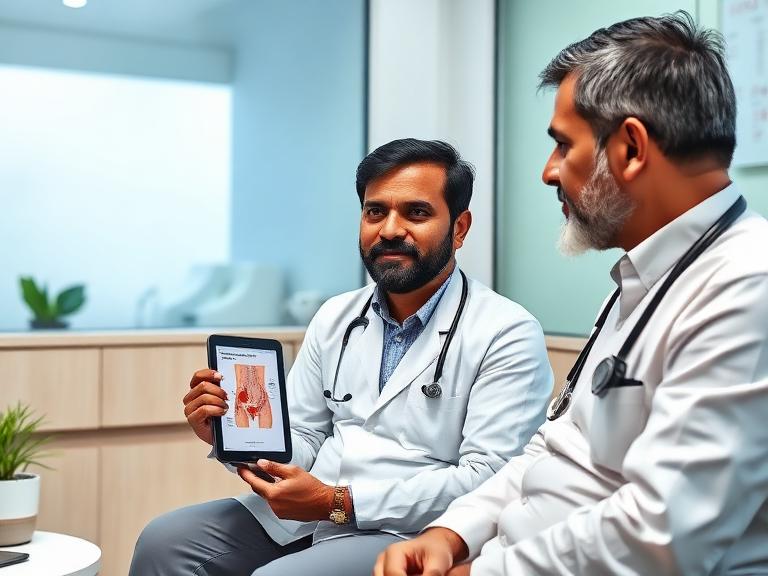
1. Why You Need a Proctologist or Colorectal Specialist
Many patients start by consulting a general practitioner or general surgeon for perianal discomfort. However, complex or high-level anal fistulas require the expertise of a dedicated specialist.
General Surgeon vs. Fellow-Trained Fistula Specialist
                   [ Anorectal Diagnostic & Treatment Care ]
                                      |
       +------------------------------+------------------------------+
       |                                                             |
[ General Surgeon ]                                      [ Specialized Proctologist ]
 - Broad general surgery focus                            - Dedicated focus on anorectal & pelvic floor care
 - Traditional open cutting methods                       - Advanced expertise in FiLaC, VAAFT & LIFT
 - Variable experience with laser tech                   - Precision mapping with 3T MRI Fistulograms
 - Potential risk of muscle trauma                        - Sphincter-preserving, non-cutting approach
A proctologist (or colorectal surgeon) focuses specifically on diseases of the colon, rectum, and anus. They complete advanced fellowship training in pelvic floor anatomy, endoanal ultrasonography, and minimally invasive laser technologies.
Key reasons to consult a dedicated fistula specialist:
- Sphincter Preservation: Protecting the anal sphincter muscles (internal and external) is essential for maintaining full bowel control.
- Lower Risk of Recurrence: Specialists use detailed imaging to identify secondary branches and blind tracts that might be missed during standard procedures.
- Mastery of Advanced Laser Tools: Delivering the correct amount of laser energy during FiLaC (Fistula Laser Closure) requires precise control to seal the tract without harming surrounding healthy muscle.
2. What Is an Anal Fistula and What Causes It?
An anal fistula is an abnormal, chronic tunnel connecting an infected internal gland in the anal canal to an external skin opening near the anus.
Primary Causes of Anal Fistula
- Perianal Abscess (Over 80% of Cases): A blocked anal gland becomes infected, creating a collection of pus. If this abscess drains or bursts, an open tunnel can remain, forming a persistent fistula.
- Inflammatory Bowel Disease (IBD): Conditions like Crohn’s disease cause deep inflammation throughout the digestive tract, which can lead to complex fistulas.
- Anorectal Tuberculosis: Common in tropical regions, tubercular fistulas require a combination of targeted medical therapy and specialized procedure planning.
- Obstetric or Surgical Trauma: Perineal tears during childbirth or previous anorectal procedures can sometimes result in fistulous tracts.
- Radiation Therapy: Radiation to the pelvic region can impair tissue healing, leading to slow-healing tracts.
Key Symptoms That Require Specialist Evaluation
| Symptom | Visual / Clinical Presentation | Diagnostic Importance |
| Persistent Pus or Blood Discharge | Chronic fluid leakage on undergarments. | Signals an open, active fistula tract draining from an internal gland. |
| Throbbing Localized Pain | Constant or sharp pain intensified by sitting or passing stools. | Indicates localized inflammation or fluid pressure within the tract. |
| Perianal Swelling or Nodule | Red, tender bump near the anal margin. | Represents an active or reforming perianal abscess. |
| Fever & Chills | Systematic spikes in body temperature. | Points to a blocked tract or spreading infection requiring prompt evaluation. |
| Skin Irritation & Itching | Redness and burning around the perianal skin. | Caused by continuous skin contact with acidic discharge. |
3. Parks Classification: Understanding Fistula Complexity
Top proctologists use the Parks Classification system to map the route of a fistula relative to the sphincter muscles. This helps determine the safest treatment plan.
       [ Cross-Section of Anal Sphincter Complex ]
                            |
    +-----------------------+-----------------------+
    |                                               |
[ Simple / Low Fistula ]                   [ Complex / High Fistula ]
  - Intersphincteric                         - High Transsphincteric
  - Low Transsphincteric                     - Suprasphincteric
                                             - Extrasphincteric
                                             - Horseshoe Fistula
1. Simple / Low Fistulas
- Intersphincteric Fistula: The tract passes between the internal and external sphincter muscles and exits near the anal opening.
- Low Transsphincteric Fistula: The tract crosses only the lower portion of the external sphincter muscle.
2. Complex / High Fistulas
- High Transsphincteric Fistula: The tract passes through the upper section of the external sphincter muscle. Cutting this muscle carries a high risk of incontinence.
- Suprasphincteric Fistula: Travels above the puborectalis muscle before turning downward toward the skin.
- Extrasphincteric Fistula: Runs outside the sphincter complex, connecting the rectum directly to the outer skin.
- Horseshoe Fistula: A curved, U-shaped tract wrapping around the back or front of the anal canal, often with multiple openings.

4. Advanced Diagnostics Used by Fistula Specialists
To prevent recurrence, leading proctologists in Hyderabad use advanced diagnostic techniques to evaluate the tract thoroughly before planning treatment:
A. 3T High-Definition MRI Fistulogram
An MRI Fistulogram is the gold standard diagnostic tool:
- Provides a detailed 3D view of the primary tract and any branching channels.
- Identifies the exact location of the internal opening inside the anal canal.
- Shows the tract’s relationship to the internal and external sphincter muscles.
- Uncovers hidden abscesses or fluid collections in deep pelvic spaces.
B. 3D Endoanal Ultrasound (EAUS)
A thin ultrasound probe inserted into the anal canal provides clear, real-time cross-sectional images of the sphincter muscles and surrounding tissue.
C. Digital Anoscopy
An illuminated digital camera allows the proctologist to examine the inner lining of the anal canal under magnification to locate crypt openings and check for inflammation.
5. Modern Sphincter-Sparing Treatments
Traditional fistula procedures, like open fistulotomy, involved cutting through skin and muscle. This resulted in large wounds, weeks of dressing changes, and a risk of fecal incontinence.
Today’s fistula specialists in Hyderabad focus on sphincter-sparing, minimally invasive techniques that preserve muscle function and speed up recovery.
A. FiLaC (Fistula Laser Closure)
FiLaC is a minimally invasive procedure using a flexible, 360-degree radial diode laser fiber.
- Procedure Steps:
- The surgeon cleans and clears the fistula tract.
- The radial laser fiber is introduced from the outer opening up to the internal opening.
- Controlled laser energy is applied in a 360° pattern while gradually withdrawing the fiber.
- The thermal energy collapses and seals the tract from the inside.
- Key Benefits:
- Preserves Muscle: No cutting of anal sphincter muscles, preserving full bowel control.
- Minimal Pain: No large open cuts or external stitches.
- Quick Recovery: Most patients return home the same day and resume light activities within 48 hours.
B. VAAFT (Video-Assisted Anal Fistula Treatment)
VAAFT uses a specialized endoscope (fistuloscope) connected to a video monitor.
- Procedure Steps:
- The surgeon inserts the scope through the external opening to view the tract directly on screen.
- The main channel and secondary branches are cleaned and cleared of infected tissue.
- The internal opening is sealed using an endostapler, mucosal flap, or sutures.
- Key Benefits:
- Ideal for complex, horseshoe, or recurrent fistulas.
- Direct video visualization ensures all secondary branches are identified and treated.
C. LIFT (Ligation of Intersphincteric Fistula Tract)
LIFT is used for deep or high transsphincteric fistulas that pass through significant muscle tissue.
- Procedure Steps:
- A small incision is made between the internal and external sphincter muscles.
- The tract is isolated, tied off (ligated) at both ends, and divided.
- The infected tissue is removed while keeping the sphincter muscles completely intact.
- Key Benefits:
- Leaves 100% of the sphincter muscle uninjured.
- High success rate for deep or complex tracts.
6. Comparison: Traditional Surgery vs. Modern Laser Treatment
| Parameter | Traditional Open Surgery (Fistulotomy) | Modern Laser Surgery (FiLaC) |
| Surgical Technique | Cuts open skin and sphincter muscle along the tract. | Laser energy seals the tract internally without cutting muscle. |
| Incontinence Risk | Moderate to High (due to muscle disruption). | Minimal to Zero (sphincter muscle is fully preserved). |
| Post-Operative Pain | Moderate to severe; requires strong pain medications. | Mild; easily managed with standard oral analgesics. |
| Wound Care | Daily dressing changes for 6 to 8 weeks. | No wound packing needed; simple water rinses. |
| Hospital Stay | 2 to 4 Days. | Daycare / Discharged within 6–24 hours. |
| Return to Normal Work | 3 to 5 Weeks. | 2 to 4 Days. |
| Success Rate | 80% – 90% | 85% – 95% (in properly evaluated cases). |
7. How to Choose a Fistula Specialist Near You in Hyderabad
Hyderabad is a major healthcare center, with top proctology clinics and hospitals located across Jubilee Hills, Banjara Hills, Gachibowli, Hitec City, Secunderabad, Begumpet, and Kukatpally.
Consider these steps when choosing a specialist:
- Check Qualifications & Experience: Look for a surgeon with a Master of Surgery (MS) or Diplomate of National Board (DNB), alongside specialized fellowship training in Coloproctology or Laser Proctology.
- Advanced Surgical Facilities: Ensure the clinic or hospital uses modern 1470 nm diode lasers with 360-degree radial fiber delivery.
- Comprehensive Diagnostics: Confirm the specialist works closely with experienced radiologists for high-resolution 3T MRI Fistulograms.
- Transparent Guidance: Choose a specialist who explains your fistula type, treatment options, costs, and expected recovery clearly.
8. Pre-Operative Preparation & Recovery Guidelines
Following a structured preparation and post-care plan supports smooth healing and reduces the risk of complications.
Pre-Operative Steps
- Complete Imaging: Ensure your 3T MRI Fistulogram is complete and reviewed by your specialist.
- Medication Audit: Inform your doctor about any medications or blood thinners you take, as adjustments may be needed before surgery.
- Bowel Preparation: Follow prescribed laxative instructions or a gentle enema the evening before surgery to clear the lower bowel.
- Fasting: Refrain from food and liquids for 6 to 8 hours prior to the procedure.
Post-Operative Care Plan
- Warm Sitz Baths: Soak the perianal area in warm water for 10–15 minutes, 2 to 3 times daily and after bowel movements, to keep the area clean and soothe tissues.
- High-Fiber Diet: Eat 25 to 35 grams of fiber daily through leafy vegetables, oats, fresh fruits, lentils, and flaxseeds.
- Hydration: Drink 3 to 4 liters of water daily to prevent dry or hard stools.
- Stool Softeners: Take prescribed laxatives for 2 to 3 weeks to avoid straining during bowel movements.
- Activity & Hygiene: Take short walks to support circulation, avoid sitting continuously for long periods, and gently pat the perianal area dry after washing.
9. Frequently Asked Questions (FAQs)
Q1: How do I find a qualified fistula specialist doctor near me in Hyderabad?
Look for fellowship-trained proctologists or colorectal surgeons who specialize in sphincter-sparing methods (FiLaC, VAAFT, LIFT) in major medical hubs like Jubilee Hills, Gachibowli, Banjara Hills, Hitec City, or Secunderabad.
Q2: Why should I consult a proctologist instead of a general doctor for an anal fistula?
Proctologists have focused training in anorectal and pelvic floor conditions. They utilize sphincter-preserving techniques and detailed 3D imaging to treat the tract effectively while protecting bowel control.
Q3: What is the cost of visiting a fistula specialist doctor in Hyderabad?
Consultation fees range between ₹600 and ₹1,200. Advanced laser surgery typically costs between ₹45,000 and ₹1,20,000, depending on the complexity of the tract, hospital facility, and laser technology used.
Q4: What happens during my first consultation with a fistula specialist doctor?
The specialist will review your symptoms, conduct a gentle examination, order an MRI Fistulogram if needed, and discuss non-cutting treatment options tailored to your condition.
Q5: Is laser fistula surgery completely sphincter-sparing?
Yes. Modern techniques like FiLaC (Fistula Laser Closure) seal the tract internally using thermal energy, keeping the anal sphincter muscles intact to prevent incontinence.
Q6: Can an anal fistula heal on its own with medication?
No. Antibiotics can help treat secondary infections or relieve swelling, but procedural intervention is necessary to close the tunnel completely.
Q7: How long does it take to recover after laser surgery by a fistula specialist?
Laser procedures are typically performed on a daycare basis. Most patients are discharged within 6 to 24 hours and can return to light daily activities in 48 to 72 hours.
Q8: Why is an MRI Fistulogram necessary before consulting a specialist?
An MRI Fistulogram provides a precise 3D layout of the fistula, mapping the main tract, secondary branches, internal openings, and muscle involvement to guide complete treatment and lower recurrence risks.
Q9: What are the early warning signs that I need to see a fistula doctor immediately?
Persistent pus or blood discharge on undergarments, throbbing pain near the anus, swelling, or fever signal an active infection that requires prompt medical evaluation.
Q10: Is laser fistula treatment covered under health insurance in Hyderabad?
Yes. Laser fistula procedures are recognized standard treatments and are covered by major health insurance policies with cashless hospitalization options.
Q11: How does FiLaC laser treatment work?
A flexible 360° radial laser fiber is guided into the fistula tract. As it is slowly withdrawn, it delivers targeted thermal energy that collapses and seals the tract without damaging healthy surrounding tissue.
Q12: What is the recurrence rate after laser fistula treatment?
When carefully mapped with an MRI Fistulogram and performed by an experienced proctologist, laser treatments achieve a success rate of 85% to 95%.
Q13: Are female proctologists available in Hyderabad for female patients?
Yes. Several hospitals and specialized clinics across Hyderabad have senior female colorectal surgeons and proctologists available for patients who prefer a female doctor.
Q14: What food should I eat after visiting a fistula specialist for treatment?
Eat a high-fiber diet featuring leafy greens, oats, fresh fruits, lentils, and whole grains, and drink 3+ liters of water daily to keep stools soft and prevent straining.
Q15: What is the difference between an anal fissure and an anal fistula?
An anal fissure is a superficial tear in the lining of the anal canal. An anal fistula is a tunnel connecting an infected gland inside the anus to an external skin opening.



Leave a Comment
You must be logged in to post a comment.