
Table of Contents
Slipped Disc Treatment Without Surgery in Hyderabad | Dr. P. Purohithi
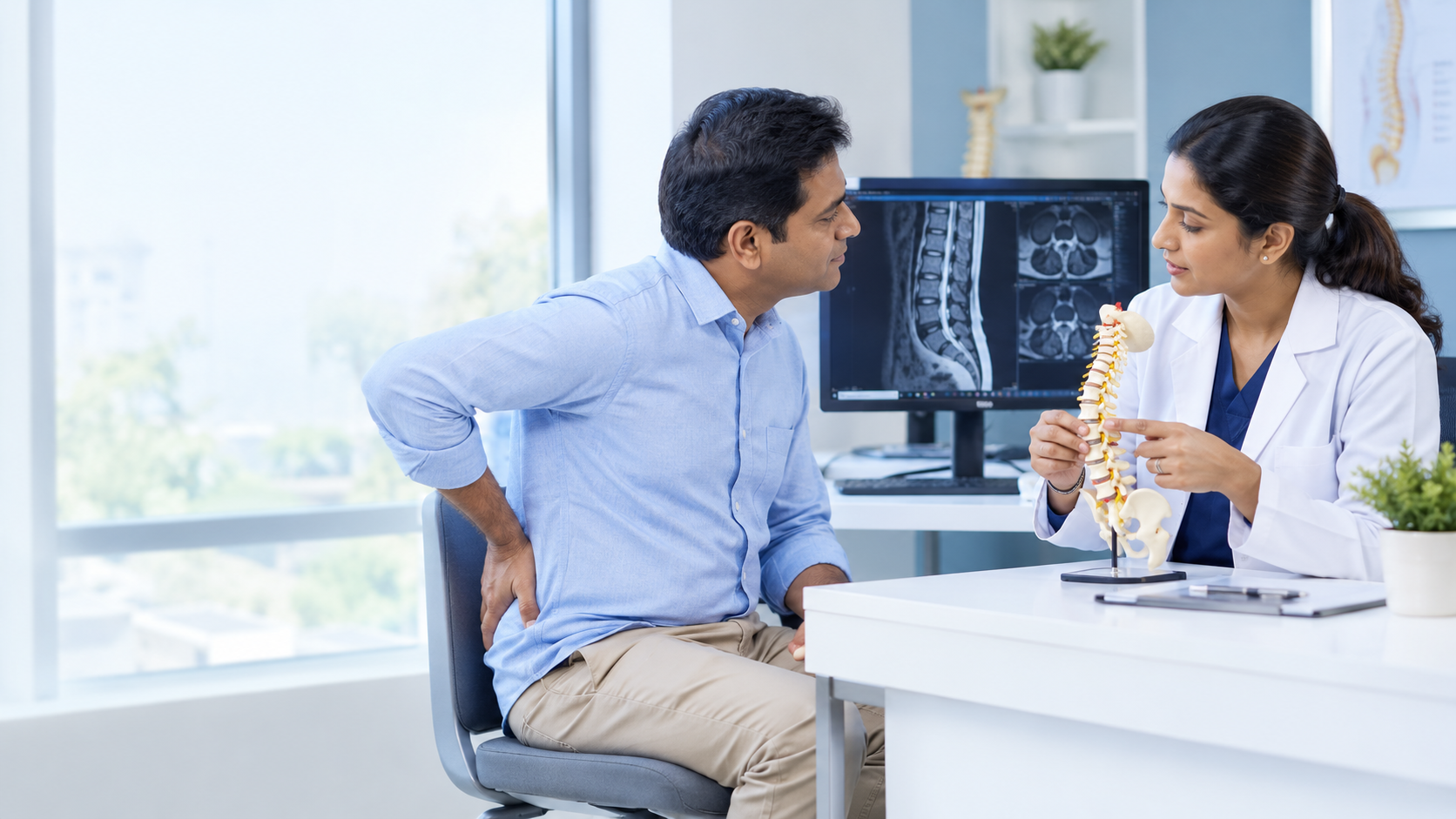
A herniated or “slipped” disc is one of the most common structural causes of severe lower back pain and radiating leg discomfort. For working professionals in Hyderabad—especially those navigating long desk hours in IT hubs like HITEC City, Gachibowli, and Financial District, as well as residents across Kondapur, Madhapur, Nallagandla, Miyapur, and Kukatpally—a slipped disc can bring daily routines to a painful halt.
Many patients diagnosed with a disc bulge or herniation fear that open spine surgery is their only path to recovery. However, modern clinical evidence shows that over 80% to 90% of slipped disc cases can resolve successfully without open surgical intervention.
Advanced Slipped Disc Treatment Without Surgery in Hyderabad utilizes targeted, image-guided interventional pain management techniques. Led by Dr. P. Purohithi (MBBS, MD, IDRA, FIPM), an interventional spine and musculoskeletal pain physician practicing at Apollo Hospital / Apollo Medical Centre in Kondapur, this approach directly addresses the localized inflammation and nerve root compression caused by disc herniations.
What is a Slipped Disc? Anatomical Structure and Mechanics
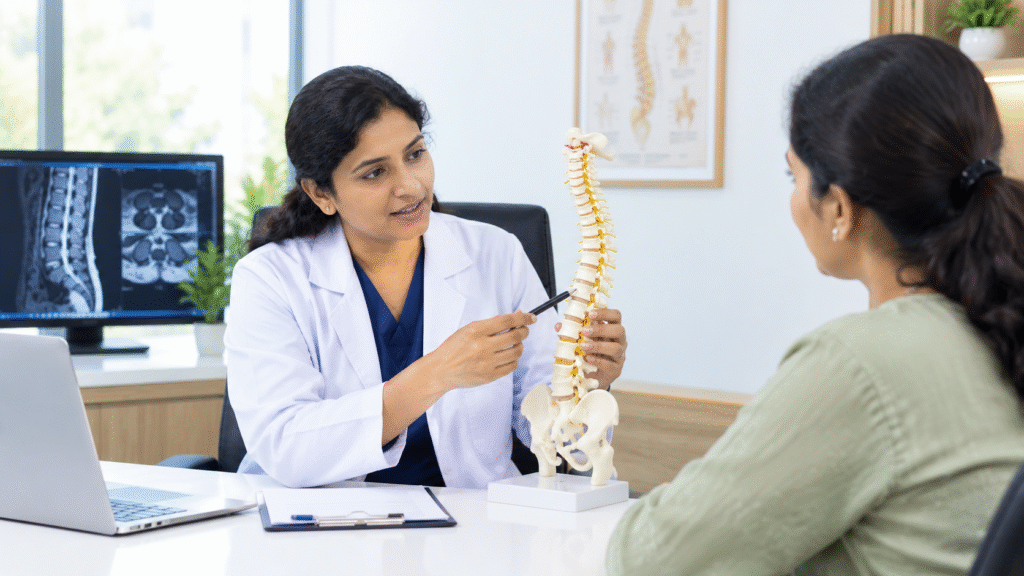
To understand how non-surgical interventional treatments work, it helps to understand spinal anatomy. The spine is constructed of individual bone segments called vertebrae, cushioned by flexible intervertebral discs.
Each intervertebral disc consists of two main parts:
- Annulus Fibrosus: A tough, fibrous outer ring composed of concentric collagen layers that contain the inner disc contents and withstand multi-directional mechanical stresses.
- Nucleus Pulposus: A soft, gel-like inner core rich in water and proteoglycans that acts as a hydraulic shock absorber during walking, lifting, and bending.
The Progression of Disc Displacement
A slipped disc does not mean the entire disc moves out of place. Instead, it describes a spectrum of structural breakdown:
- Disc Bulge: The inner gel presses outward, causing the outer ring to bulge symmetrically into the spinal canal without tearing the outer fibers.
- Disc Protrusion (Herniation): The inner gel breaks through inner layers of the annulus fibrosus, creating a focal bulge that encroaches on spinal nerve roots.
- Disc Extrusion: The gel breaks completely through the outermost layer of the annulus fibrosus, extending into the epidural space while remaining connected to the disc space.
- Disc Sequestration: A fragment of the inner gel breaks away entirely from the main disc, lying free within the spinal canal.
Symptoms of a Slipped Disc: From Localized Pain to Sciatica
Symptoms depend on whether the displaced disc material presses directly on a spinal nerve root or merely triggers local chemical irritation.
1. Radiating Nerve Pain (Sciatica / Radiculopathy)
When a bulging or extruded disc in the lower back (commonly L4-L5 or L5-S1) compresses a lumbar nerve root, it triggers sciatica. Pain travels along the path of the sciatic nerve, creating a sharp, burning, or electric shock-like sensation from the lower back through the buttock, outer thigh, calf, and into the foot or toes.
2. Localized Low Back Pain
A deep, aching pain centered across the lower back, caused by micro-tears in the outer annulus fibrosus (which is rich in sensitive nerve endings) or protective muscle spasms around the affected spinal segment.
3. Paresthesia (Numbness & Tingling)
Nerve compression alters normal sensory nerve signaling, resulting in a “pins-and-needles” sensation or partial numbness along specific dermatomes (sensory skin zones) in the leg or foot.
4. Motor Weakness
Severe or prolonged nerve root compression can interfere with motor signals to muscles, causing localized leg weakness—such as difficulty lifting the front of the foot while walking (foot drop) or difficulty rising onto the toes.
5. Cervical Disc Herniation Symptoms
When a slipped disc occurs in the neck (cervical spine, such as C5-C6 or C6-C7), pain radiates down the shoulder blade, arm, forearm, and fingers, often accompanied by hand numbness or grip weakness.
Causes and Everyday Risk Factors in Hyderabad
A slipped disc can develop from a single traumatic event, but it more commonly results from gradual, age-related disc degeneration combined with cumulative postural stress.
- Prolonged Sedentary Desk Work: Sitting for long hours in unoptimized office chairs shifts the spine into forward pelvic tilt and lumbar flexion. This increases intra-discal pressure by over 40% compared to standing, straining the posterior annulus fibrosus.
- Repetitive & Improper Lifting: Lifting heavy objects while bending forward and twisting at the waist puts uneven mechanical stress on posterior disc fibers, increasing the risk of annular tears.
- Age-Related Dehydration: As intervertebral discs age, their water content drops, reducing shock-absorption capacity and making the outer fibrous ring more brittle.
- Core Muscle Deconditioning: Weakness in the stabilizing abdominal, lumbar multifidus, and gluteal muscles leaves the spine vulnerable to micro-trauma during daily movements.
- Excess Body Weight: Higher body weight increases baseline mechanical compression across lumbar spinal segments (L4-S1).
How a Slipped Disc Is Diagnosed
Accurate diagnosis is essential to rule out other sources of back pain (such as facet joint arthritis or sacroiliac joint inflammation) and confirm whether non-surgical interventional treatment is appropriate.
- Detailed Clinical Evaluation: Reviewing symptom history, pain characteristics, positional triggers, and daily activity limits.
- Targeted Neurological Exam: Assessing motor strength, sensory dermatomes, and deep tendon reflexes to determine which specific nerve root is compressed.
- Provocative Neural Tension Tests: Performing physical examination maneuvers like the Straight Leg Raise (SLR) test or Femoral Nerve Stretch test to reproduce radiating leg symptoms.
- Radiological MRI Correlation: Reviewing high-resolution MRI scans to evaluate disc height, bulge size, neural foraminal stenosis, and nerve root compression.
Non-Surgical Interventional Treatment Options
Modern interventional pain management uses targeted, image-guided day-care procedures to reduce nerve root inflammation, calm pain signaling, and create an environment that allows the body to naturally resorb displaced disc material.
1. Transforaminal Epidural Steroid Injections (TFESI)
Considered a primary non-surgical intervention for nerve root compression caused by a slipped disc.
- How it works: Performed under real-time C-Arm fluoroscopic (X-ray) guidance, a specialized micro-needle is positioned inside the neural foramen—the opening where the pinched spinal nerve exits the spine. Contrast dye confirms accurate needle location before administering a targeted anti-inflammatory formulation directly over the irritated nerve root.
- Clinical Benefits: Concentrates medication at the exact site of pathology, clears pro-inflammatory cytokines, reduces nerve edema, and alleviates leg pain.
2. Interlaminar & Caudal Epidural Injections
Used when a patient has multi-level disc bulges, central canal stenosis, or widespread lower back and bilateral leg discomfort.
- How it works: Medication is delivered into the epidural space through an interlaminar window or the caudal canal at the base of the spine, washing across multiple spinal levels under fluoroscopic guidance.
3. Pulsed Radiofrequency (PRF) Neuromodulation
An option for persistent nerve root pain that remains sensitive after initial anti-inflammatory injections.
- How it works: PRF delivers short bursts of high-voltage radiofrequency electric fields near the affected dorsal root ganglion. This helps reset abnormal nerve signal transmission without using thermal energy or damaging nerve tissue.
4. Structured Physical Rehabilitation & Spontaneous Resorption
Interventional procedures help lower acute pain levels so patients can safely begin structured physical therapy. Over time, the immune system uses specialized cells called macrophages to naturally break down and resorb extruding disc material, allowing the disc bulge to shrink.
Benefits, Limitations, and Procedural Safety
Understanding the advantages and boundaries of non-surgical disc care helps patients make informed treatment choices.
Key Clinical Benefits
- Preservation of Natural Spine Structure: Procedures require no surgical incisions, bone removal (laminectomy), or metal hardware placement, leaving natural spinal mechanics intact.
- Day-Care Procedure: Performed under local anesthesia on an outpatient basis. Patients generally return home after a brief recovery period.
- Targeted Image-Guided Safety: Real-time visual guidance (C-Arm Fluoroscopy) ensures exact needle placement while protecting nearby blood vessels and neural structures.
- Faster Functional Recovery: Allows patients to resume light daily activities and return to work sooner than open spine surgery.
Limitations & Realistic Expectations
Non-surgical interventions aim to reduce local inflammation, calm pinched nerves, and support natural healing. While many patients experience long-term relief, these procedures do not instantly restore lost disc height. Instead, they provide a comfortable, pain-free window during which the body can resorb disc material while the patient strengthens core stabilizing muscles.
Procedural Safety Profile
Minimally invasive interventional disc procedures carry low complication rates when performed by a fellowship-trained pain specialist using sterile techniques and real-time image guidance. Minor temporary effects can include local needle soreness or brief skin flushing.
When Surgery Is Necessary: Red-Flag Symptoms
While most slipped discs can be managed without surgery, certain severe neurological conditions require immediate surgical evaluation:
- Cauda Equina Syndrome: Sudden loss of bowel or bladder control (incontinence or retention) accompanied by numbness in the groin, buttocks, or inner thighs (“saddle anesthesia”). This is a medical emergency.
- Progressive Motor Loss: Rapidly worsening muscle weakness, such as a sudden inability to lift the foot (foot drop) or collapse of the knee while walking.
- Intractable Unrelenting Pain: Severe pain that fails to respond to intensive medical and interventional management and prevents all basic rest.
If you experience red-flag symptoms, seek emergency hospital assessment immediately.
To book an outpatient evaluation for ongoing back or radiating leg pain, visit the Booking & Appointment Portal.
Profile of the Specialist: Dr. P. Purohithi
Choosing an interventional physician with dedicated fellowship training in non-surgical spine procedures is essential for effective disc management.
Medical Qualifications & Clinical Background
Dr. P. Purohithi is a Senior Interventional Spine and Musculoskeletal Pain Physician practicing in Kondapur, Hyderabad. With over 13 years of broad clinical experience, her practice focuses on image-guided, non-surgical procedures for complex spine, nerve, and joint conditions.
- Medical Background: Completed MBBS from PES Institute of Medical Sciences and Research (Kuppam) and MD in Anaesthesiology from Narayana Medical College (Nellore), building expertise in pain physiology, nerve anatomy, and pharmacology.
- Fellowship Credentials: Earned post-graduate qualifications including the Fellowship in Interventional Pain Management (FIPM) from Aesculap Academy / Daradia Pain Clinic and the Indian Diploma in Regional Anaesthesia (IDRA) from Sir Ganga Ram Hospital, New Delhi.
- Professional Affiliations: Active member of the Indian Society for the Study of Pain (ISSP), Indian Society of Anaesthesiologists (ISA), and Indian College of Anaesthesia.
Patient Care Philosophy
Dr. Purohithi prioritizes precise, individual diagnostic evaluations. She takes time to understand each patient’s pain history, examine spinal function, and review MRI imaging to design clear, non-surgical treatment plans tailored to their specific needs.
To learn more about her practice, visit the About Dr. P. Purohithi page.
Frequently Asked Questions (FAQs)
1. Can a slipped disc heal without open spine surgery?
Yes. Clinical studies show that 80% to 90% of slipped disc cases can resolve without open surgery through conservative care and image-guided interventional pain management.
2. What is Slipped Disc Treatment Without Surgery?
It refers to minimally invasive, non-surgical procedures—such as fluoroscopy-guided transforaminal epidural steroid injections, nerve blocks, and structured rehabilitation—that reduce nerve inflammation and support natural disc resorption.
3. Where does Dr. P. Purohithi consult in Hyderabad?
Dr. P. Purohithi consults at Apollo Hospital / Apollo Medical Centre, located near AMB Mall, Kothaguda X Roads, Kondapur, Hyderabad, Telangana 500084.
4. What is a Transforaminal Epidural Steroid Injection (TFESI)?
A TFESI is a non-surgical day-care procedure performed under real-time C-Arm fluoroscopic guidance. It delivers anti-inflammatory medication directly into the neural foramen near the compressed nerve root to reduce swelling and relieve leg pain.
5. How long does it take to recover from a non-surgical slipped disc procedure?
Interventional injections are outpatient day-care procedures. Patients return home the same day after a brief 30- to 60-minute observation period and can usually resume light daily activities within 24 hours.
6. Does the body naturally resorb a slipped disc?
Yes. Through a biological process called spontaneous resorption, the immune system uses specialized cells to gradually break down and shrink extruded gel material over time.
7. How quickly does an epidural injection reduce pain from a slipped disc?
Initial pain reduction typically begins within 2 to 5 days as local nerve inflammation subsides, with progressive improvement continuing over subsequent weeks.
8. Are interventional spine injections painful?
Procedures are performed under local skin anesthesia to keep discomfort to a minimum. Most patients report feeling only mild pressure during needle placement. Mild local site soreness typically settles within 24 to 48 hours.
9. Can a slipped disc cause pain in the leg and foot without severe back pain?
Yes. If the displaced disc material presses directly on a sensory spinal nerve root with minimal local spine inflammation, radiating leg pain (sciatica) or numbness can feel much worse than the pain in the lower back itself.
10. How many interventional injection sessions will I need?
Treatment plans vary based on individual clinical needs. Many patients experience significant, lasting relief from a single injection, while others may benefit from 2 to 3 targeted treatments combined with core physical rehabilitation.
11. Is an MRI scan required before receiving non-surgical treatment?
An MRI scan provides clear structural detail regarding disc size, direction of bulge, and compressed nerve roots. If you already have recent MRI films and written reports, please bring them to your consultation.
12. What daily habits help prevent a slipped disc from worsening?
Maintaining proper ergonomic seat support, avoiding prolonged slouched sitting, keeping core stabilizing muscles strong, and using correct lifting mechanics (bending at the knees rather than the waist) help protect your spinal discs.
13. Does health insurance cover non-surgical day-care spine procedures in Hyderabad?
Many health insurance plans and corporate TPA coverages in India approve day-care interventional spine procedures when medically recommended. Check with your insurance provider or clinic desk for coverage details.
14. What areas in Hyderabad are close to Dr. Purohithi’s Kondapur practice?
The Kondapur clinic is easily accessible to patients living or working in Kondapur, HITEC City, Gachibowli, Madhapur, Nallagandla, Miyapur, Kothaguda, Kukatpally, and Financial District.
15. How can I book an appointment with Dr. P. Purohithi?
You can schedule a consultation online at https://drpurohithi.com/booking-appointment/ or call the care team at +91 88856 23283.



Leave a Comment
You must be logged in to post a comment.