
Table of Contents
Advanced Acne Scar Treatment in Hyderabad | Cost & Top Procedures
For thousands of individuals across Telangana, overcoming active acne breakouts is often only half the battle. What remains on the skin surface—indented pits, uneven textures, dark spots, and stubborn tethered depressions—can linger for years, creating significant psychological and cosmetic distress. Finding effective, clinical-grade Acne Scar Treatment in Hyderabad has become a primary aesthetic goal for young working professionals, students, and adults seeking smooth, rejuvenated skin.
Hyderabad has evolved into a leading healthcare and aesthetic center in South India. Localities such as Banjara Hills, Jubilee Hills, Gachibowli, and Madhapur feature state-of-the-art dermatological suites equipped with US-FDA-approved energy devices, specialized surgical instruments, and advanced scar-revision modalities.
Understanding your specific scar morphology, managing realistic expectations, and partnering with an expert MD dermatologist are vital steps toward achieving long-term skin transformation.
1. Anatomy of Acne Scarring: Why Do Scars Form?
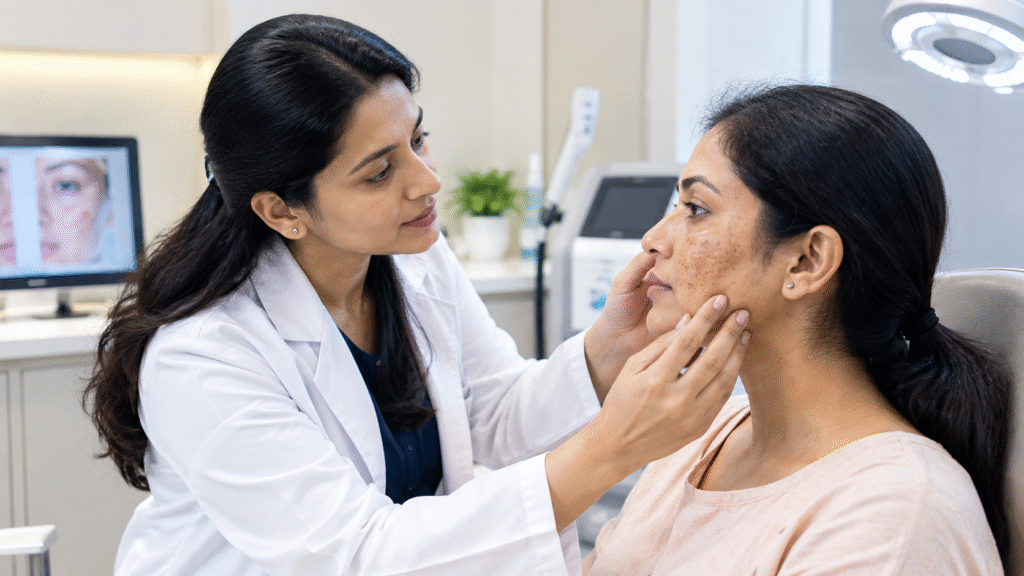
Acne scarring is the permanent structural consequence of intense dermal inflammation caused by severe acne vulgaris (Grade 3 papules/pustules or Grade 4 nodulocystic breakouts). To understand why simple creams cannot erase scars, one must examine the histological changes occurring within the skin layers:
Dermal Destruction
When an inflamed pore swells beyond capacity, the follicular wall ruptures deep within the dermis. The body releases collagenases and inflammatory cytokines that destroy native collagen fibers, elastic tissue, and connective support networks.
Dysregulated Healing Response
After the infection clears, the skin attempts repair by synthesizing new collagen. If the tissue response produces insufficient matrix fibers, a depressed or atrophic scar forms. Conversely, if the skin overproduces fibrous collagen, a raised hypertrophic or keloidal scar develops.
Dermal Fibrosis & Tethering
During atrophic scar formation, dense fibrous bands develop between the epidermis and deep underlying subcutaneous tissue. These fibrous cords act like tight anchor ropes, physically pulling the surface downward into distinct wave-like indentations (rolling scars).
   Normal Skin Layer                     Atrophic Scar Formation
┌─────────────────────────┐           ┌─────────────────────────┐
│       EPIDERMIS         │           │   \   Depressed  /      │  ◄── Surface Indentation
├─────────────────────────┤           ├────\──── Surface ──/────┤
│                         │           │     \             /     │
│       DERMIS            │           │   Tethered Fibrous      │  ◄── Dermal Collagen Destruction
│  (Intact Collagen)      │           │      Bands (Anchor)     │      & Dense Tethering Bands
│                         │           │        │   │   │        │
└─────────────────────────┘           └────────┴───┴───┴────────┘
2. Classification of Acne Scar Types
No two faces exhibit identical scar patterns. Effective Acne Scar Treatment in Hyderabad relies on accurate clinical classification prior to initiating treatment:
| Scar Type | Visual Morphology | Sub-Surface Pathology | Optimal Clinical Interventions |
| Ice Pick Scars | Narrow (< 2mm), deep, sharply defined vertical punctures extending into deep dermis/subcutis | Epithelialized deep tracts without surface elasticity | TCA CROSS, Punch Excision, Microneedling RF |
| Boxcar Scars | Round/oval depressions with sharply demarcated, vertical walls (0.5mm – 4mm wide) | Partial dermal tissue loss without deep tethering | Fractional CO2 Laser, Er:YAG Laser, MNRF, Fillers |
| Rolling Scars | Wide (> 4mm), shallow undulations giving the skin a wavy, uneven texture | Dense fibrous bands anchoring epidermis to sub-dermal fascia | Subcision + Fillers / PRP / Cannula Resurfacing |
| Hypertrophic / Keloid Scars | Raised, thick, pink/flesh-colored firm nodules extending beyond original injury | Excess fibroblast activity and dense collagen accumulation | Intralesional Steroid Injections, Pulsed Dye Laser, Cryotherapy |
| Post-Inflammatory Hyperpigmentation (PIH) | Flat brown, tan, or dark spots without structural tissue loss | Excess epidermal/dermal melanin deposition post-inflammation | Q-Switched Laser, Chemical Peels, Topical Actives |
3. Comprehensive Clinical Treatment Modalities in Hyderabad
Dermatologists in Hyderabad employ advanced mechanical, surgical, and energy-based technologies to revise scars safely across South Asian skin types (Fitzpatrick Types IV to VI).
A. Microneedling Radiofrequency (MNRF)
MNRF has emerged as a frontline treatment for scar revision in Indian skin due to its minimal risk of hyperpigmentation compared to traditional fully ablative lasers:
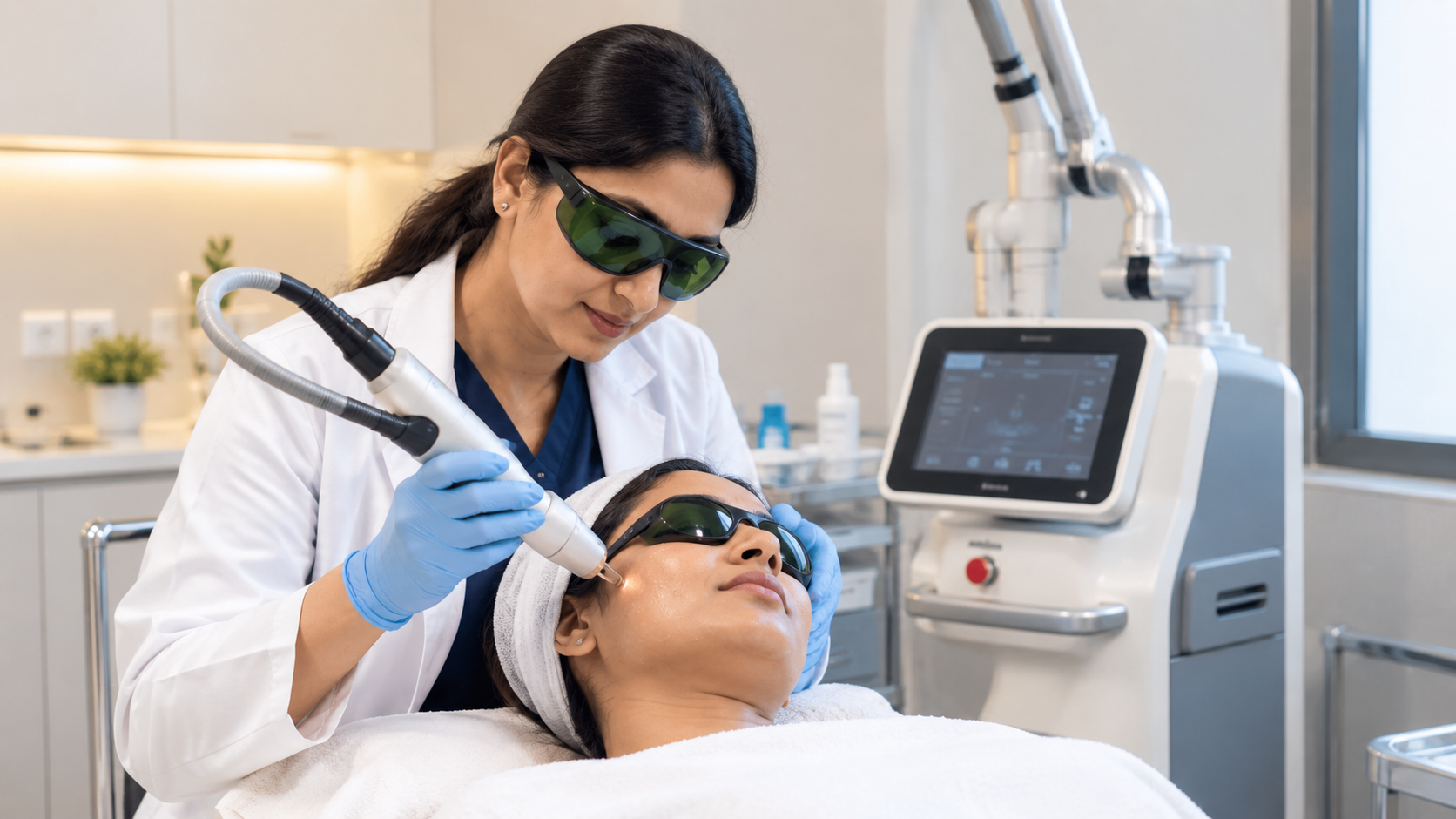
- Mechanism: Ultrafine insulated gold-plated microneedles penetrate the skin at precisely controlled depths (0.5mm to 3.5mm). Once deployed in the dermis, radiofrequency thermal energy is delivered directly to target tissue while preserving the outer epidermis.
- Benefits: Triggers intense neo-collagenesis and elastic fiber production without inflicting heat damage on surface pigment cells.
- Ideal For: Rolling scars, medium-depth boxcar scars, large pores, and overall skin tightening.
B. Fractional CO2 & Erbium:YAG Lasers
- Fractional CO2 Laser (10,600 nm): Emits microscopic thermal columns (microthermal zones) deep into the dermis, vaporizing damaged scar tissue while leaving surrounding tissue intact for rapid re-epithelialization.
- Erbium:YAG Laser (2,940 nm): Highly absorbed by water in skin cells, allowing precise, shallow ablation with less thermal spread—ideal for delicate areas or shallower boxcar scars.
- Safety Protocols: In Hyderabad’s tropical climate, post-laser care requires low fluences and pulse stacking to eliminate post-inflammatory hyperpigmentation.
C. Subcision (Tethered Band Release)
- Procedure: A specialized Nokor needle, blunt-tip cannula, or micro-blade is inserted horizontally beneath the skin surface under local anesthesia.
- Action: The physician sweeps the instrument laterally, manually cutting and releasing the dense fibrous cords that anchor rolling scars down.
- Synergy: Releasing tethered bands allows the depressed skin to rise immediately. When combined with autologous Platelet-Rich Plasma (PRP), hyaluronic acid dermal fillers, or fat grafting, subcision prevents the severed bands from reattaching during healing.
D. TCA CROSS (Chemical Reconstruction of Skin Scars)
- Procedure: High-concentration Trichloroacetic Acid (60% to 100%) is applied using a micro-applicator directly inside narrow ice pick scar pits.
- Mechanism: Induces controlled chemical cauterization and localized dermal necrosis within the scar tract.
- Outcome: Triggers an intense inflammatory reaction that stimulates fresh collagen synthesis from the base of the scar upward, gradually closing narrow punctures over multiple sessions.
E. Dermal Fillers & Biostimulators
- Hyaluronic Acid (HA) Fillers: Cross-linked HA gels injected under deep boxcar or rolling scars provide immediate volume restoration and surface lifting.
- Collagen Biostimulators (Poly-L-Lactic Acid / Calcium Hydroxylapatite): Gradually stimulate long-term endogenous collagen production, progressively filling depressed areas over 3 to 6 months.
4. The Power of Combination Scar Revision Protocols
Single-modality treatments rarely produce complete satisfaction because most individuals present with a combination of ice pick, boxcar, and rolling scars simultaneously. Leading dermatologists in Hyderabad customize multi-step treatments within a single session or across planned phases:
                  [ Clinical Diagnostic Assessment ]
                                  │
      ┌───────────────────────────┼───────────────────────────┐
      ▼                           ▼                           ▼
[ Deep Ice Pick ]         [ Tethered Rolling ]        [ Boxcar / Surface ]
      │                           │                           │
      ▼                           ▼                           ▼
(TCA CROSS Therapy)      (Subcision + PRP/Filler)     (MNRF / Fractional CO2)
      │                           │                           │
      └───────────────────────────┼───────────────────────────┘
                                  │
                                  ▼
                [ Integrated Dermal Remodeling Phase ]
Combined Session Example:
- Step 1 (Subcision): Release deep fibrous attachments under rolling scars.
- Step 2 (TCA CROSS): Treat narrow ice pick scars with focused chemical application.
- Step 3 (MNRF or Laser Resurfacing): Treat the entire region to uniformize skin texture and stimulate structural collagen synthesis.
5. Cost Breakdown of Acne Scar Treatment in Hyderabad
Pricing for scar revision depends on the severity of scarring, locality of the medical facility, quality of technology (US-FDA approved vs. generic systems), and doctor expertise.
| Treatment Type | Average Cost Range per Session (INR) | Typical Number of Sessions | Downtime Duration |
| Dermatologist Consultation | ₹600 – ₹1,200 | 1 – 2 initial visits | None |
| TCA CROSS Session | ₹3,000 – ₹6,000 | 3 – 5 Sessions | 3 – 5 days (white frost/crust) |
| Subcision (Per Area) | ₹4,500 – ₹9,000 | 2 – 3 Sessions | 2 – 4 days (minor swelling/bruising) |
| Microneedling RF (MNRF) | ₹6,500 – ₹14,000 | 4 – 6 Sessions | 1 – 3 days (mild redness/grid) |
| Fractional CO2 Laser | ₹5,500 – ₹12,000 | 3 – 5 Sessions | 4 – 7 days (bronzing/peeling) |
| Subcision + PRP Combination | ₹8,000 – ₹16,000 | 3 – 4 Sessions | 3 – 5 days |
| Dermal Filler for Scars | ₹18,000 – ₹32,000 | 1 Session (lasts 12-18 mos) | 1 – 2 days |
6. Prime Localities for Scar Revision Clinics in Hyderabad
Top medical infrastructure for scar treatments is distributed across key commercial and residential hubs in Hyderabad:
- Banjara Hills & Jubilee Hills: Houses luxury aesthetic clinics featuring advanced FDA-cleared laser platforms (e.g., Alma Accent Prime, Candela, Lumenis Ultrapulse) led by renowned senior dermatologists.
- Gachibowli, Kondapur & Madhapur: High-tech clinics catering to IT professionals with flexible weekend appointments and minimal-downtime procedures like MNRF.
- Kukatpally & Miyapur: Accessible clinical setups offering reliable, cost-effective scar treatments and combination packages.
- Secunderabad & Himayatnagar: Established skin hospitals providing comprehensive surgical and medical scar management.
7. Pre-Treatment Preparation & Post-Treatment Aftercare Guidelines
Maximizing outcome safety and preventing complications requires strict adherence to pre- and post-procedural protocols:
Pre-Treatment Rules (14 Days Prior):
- Stop Retinoids: Cease application of topical Tretinoin, Adapalene, or Glycolic acid 5 to 7 days before energy-based procedures.
- Avoid Sun Tanning: Avoid direct outdoor sun exposure or tanning to lower active epidermal melanin levels.
- Manage Active Breakouts: Complete acne treatment to clear active bacterial lesions before undergoing invasive scar procedures.
Post-Treatment Rules (1 to 14 Days After):
Post-Procedure Care (First 7 Days)
├── Days 1-3: Use only mild non-foaming cleansers & doctor-prescribed healing ointments (Cica cream).
├── Days 1-7: Apply Broad-Spectrum Mineral Sunscreen (Zinc Oxide/Titanium Dioxide) every 3 hours indoors & outdoors.
├── Strict Rule: DO NOT pick, scratch, or peel micro-crusts or grid marks manually.
└── Avoid: Intense workouts, saunas, steam baths, and swimming for 5-7 days post-procedure.
8. Frequently Asked Questions (FAQs)
Q1: What is the best Acne Scar Treatment in Hyderabad?
There is no single “best” treatment for every individual. Because most faces have a mix of scar types, optimal outcomes are achieved through customized combination therapy—such as joining Subcision for tethered rolling scars, TCA CROSS for narrow ice pick pits, and Microneedling RF or Fractional CO2 laser for overall boxcar resurfacing.
Q2: How much does Acne Scar Treatment in Hyderabad cost?
Prices vary based on clinic location, doctor experience, and technology grade. Basic diagnostic consultations range from ₹600 to ₹1,200. Targeted procedures like Subcision or TCA CROSS cost between ₹3,000 and ₹9,000 per session, while advanced resurfacing lasers and MNRF range between ₹5,500 and ₹15,000 per session.
Q3: Can acne scars be removed 100% permanently?
Complete 100% restoration to uninjured skin is scientifically unattainable because true scar tissue lacks original skin architecture. However, modern combination procedures routinely deliver a permanent 70% to 90% improvement in scar depth, smoothness, and visual appearance.
Q4: How many sessions are needed for noticeable results?
Most patient protocols require 4 to 6 clinical sessions spaced 4 to 6 weeks apart. This interval gives the dermis adequate time to produce and restructure collagen fibers between interventions.
Q5: Are laser acne scar treatments safe for Indian skin types?
Yes. When performed by qualified dermatologists using US-FDA-approved devices calibrated for South Asian skin (Fitzpatrick Types IV–VI), energy levels are set to protect surface pigment, preventing post-inflammatory hyperpigmentation.
Q6: What is the downtime after Fractional CO2 or MNRF?
MNRF typically involves mild redness and micro-crusting for 1 to 3 days. Fractional CO2 laser resurfacing requires 4 to 7 days of downtime characterized by redness, swelling, bronzing, and light peeling, requiring complete sun avoidance.
Q7: What is Subcision and how does it help rolling scars?
Subcision is a minor clinical procedure where a specialized hypodermic or Nokor needle is inserted beneath rolling scars. The needle is moved laterally to physically cut dense fibrous bands pulling the skin downward, releasing the scar depression so it lifts level with surrounding skin.
Q8: How does TCA CROSS work on ice pick scars?
TCA CROSS involves depositing high-concentration Trichloroacetic Acid (60%–100%) inside narrow ice pick scars using a fine probe. This causes localized chemical coagulation, triggering an inflammatory reaction that builds fresh collagen from the base of the scar upward.
Q9: Is laser acne scar removal painful?
Treatments are well-tolerated. Clinics apply strong topical numbing creams 45 minutes before energy-based procedures, reducing sensations to mild warmth or light prickling.
Q10: Should active acne be cured before treating acne scars?
Yes. Active bacterial acne must be stabilized with oral or topical treatments before scar revision begins. Performing invasive procedures over active inflammatory breakouts can spread bacteria and cause new scar formation.
Q11: How does Hyderabad’s climate impact post-treatment healing?
Hyderabad’s warm climate and high UV index increase the risk of post-procedural tanning and hyperpigmentation on vulnerable, newly resurfaced skin. Wearing broad-spectrum mineral sunscreen and avoiding peak sun exposure are necessary post-treatment measures.
Q12: What is the difference between hypertrophic scars and atrophic scars?
Atrophic scars are indented pits caused by collagen loss during severe inflammation. Hypertrophic scars are raised, thickened bumps resulting from an overproduction of fibrous collagen during the healing process.
Q13: Can topical creams fix deep ice pick or boxcar scars?
No. Over-the-counter or prescription creams only improve superficial epidermal texture and pigmentation. Deep structural loss in the dermal layer requires physical, surgical, or energy-based mechanical remodeling.
Q14: What skincare ingredients support recovery after clinical scar procedures?
Gentle non-foaming cleansers, pure Hyaluronic Acid, ceramide-rich barrier repair creams, growth factor peptide serums, and mineral sunscreens accelerate tissue repair and protect sensitive post-procedure skin.
Q15: Why is customized combination therapy better than single-laser treatments?
Because individual faces present multiple scar types at varying depths, single modalities only address part of the problem. Combining Subcision, TCA CROSS, and MNRF targets each specific scar depth simultaneously, yielding dramatically superior overall skin smoothness.
9. Next Steps: Securing a Dermatological Consultation
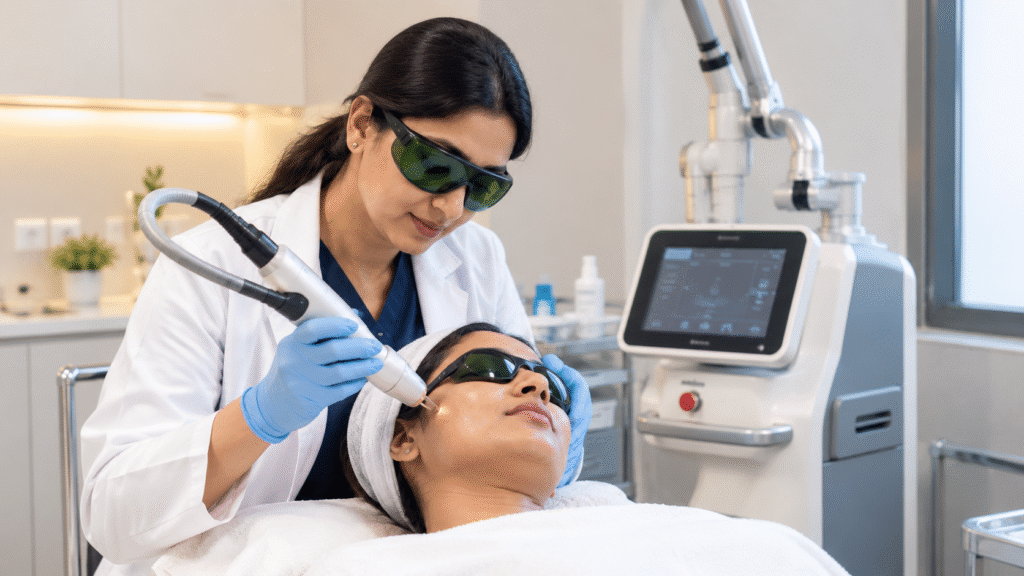
Achieving smoother skin requires clinical precision and patience. If deep pits, rolling undulations, or uneven skin texture affect your confidence, schedule an evaluation with a board-certified MD dermatologist in Hyderabad. A comprehensive diagnostic assessment will identify your exact scar patterns and establish a targeted, safe, and effective scar revision path forward.




Leave a Comment
You must be logged in to post a comment.