
Starting a yoga journey can feel overwhelming, especially when you’re exposed to countless styles, poses, techniques, and wellness advice online. Many beginners wonder whether they are flexible enough, fit enough, or experienced enough to start practicing yoga.
The truth is that yoga is for everyone.
You don’t need expensive equipment, years of fitness experience, or advanced flexibility to begin. All you need is the willingness to show up consistently and take the first step toward a healthier lifestyle.
Whether your goal is to improve flexibility, reduce stress, increase energy, or simply create a better connection with your body and mind, yoga offers a sustainable path to long-term wellness.
This beginner’s guide will help you understand how to start a yoga practice that you can maintain and enjoy for years to come.
Why Yoga Is More Than Just Exercise
Many people think yoga is simply a stretching routine. In reality, yoga is a holistic practice that combines movement, breathing, mindfulness, and self-awareness.
Regular yoga practice can help improve:
- Flexibility and mobility
- Strength and balance
- Mental clarity and focus
- Stress management
- Sleep quality
- Posture and body awareness
- Emotional well-being
This is why millions of people worldwide are incorporating yoga and meditation into their daily routines.
Unlike many fitness trends that come and go, yoga is designed to support physical, mental, and emotional health simultaneously.
Start Small and Build Consistency
One of the biggest mistakes beginners make is trying to do too much too soon.
Many people begin with high motivation, commit to hour-long sessions every day, and then quickly lose momentum.
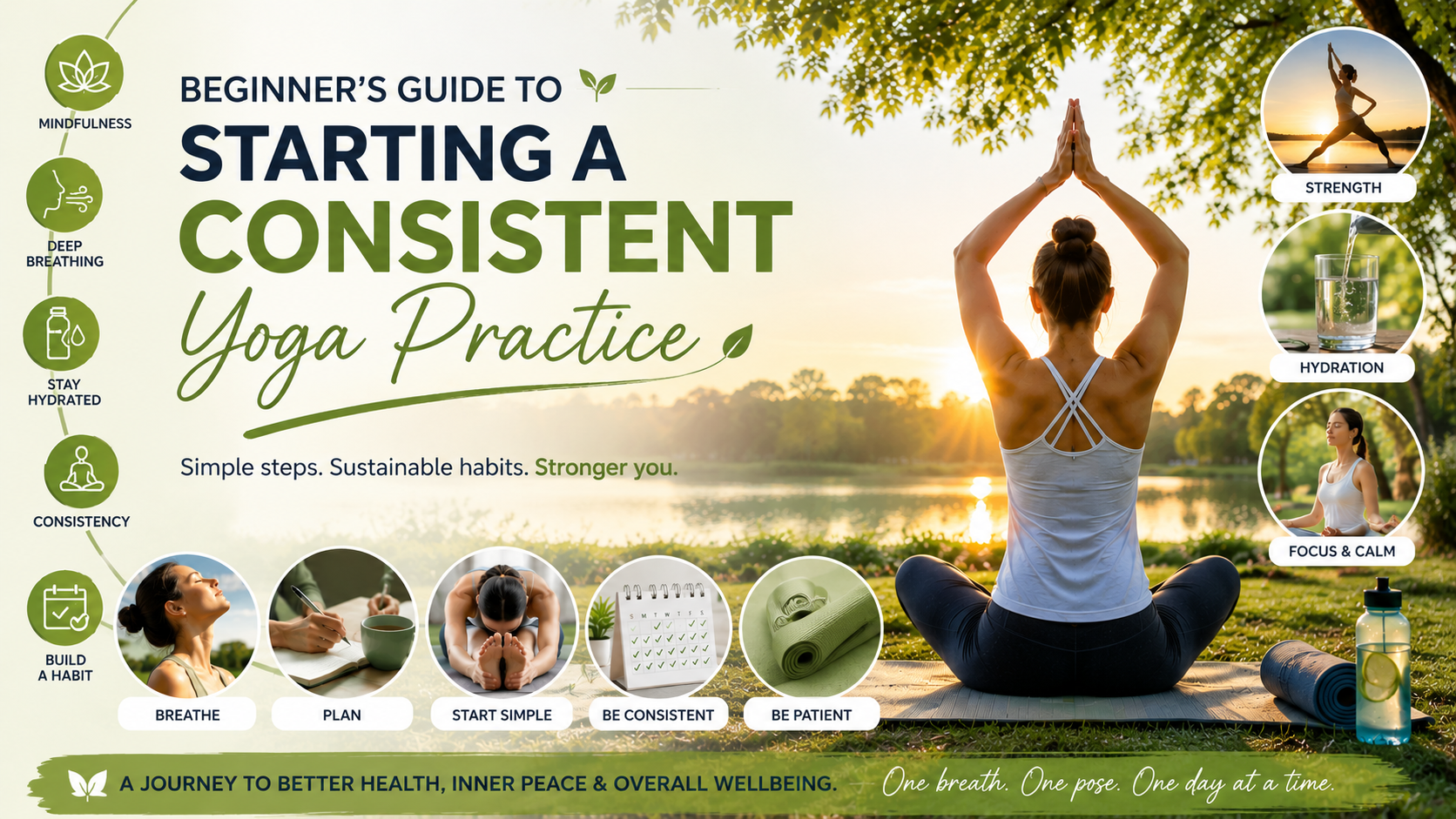
The key to creating a lasting yoga habit is starting small.
Even 10 to 15 minutes of daily practice can create noticeable improvements over time.
A short daily routine is far more effective than a two-hour session once every few weeks.
When building consistency:
- Focus on showing up rather than performing perfectly.
- Keep sessions manageable.
- Create a realistic schedule.
- Celebrate small improvements.
Remember that consistency matters more than intensity.
A simple 15-minute practice performed regularly will produce better results than occasional long sessions.
Focus on Breathing First
Before mastering yoga poses, it is important to understand the role of breathing.
Breath control is one of yoga’s most powerful tools.
Many people unknowingly breathe shallowly throughout the day, especially when experiencing stress or spending long hours at a desk.
Yoga teaches conscious breathing techniques that help calm the nervous system and improve overall well-being.
Many guided yoga training sessions begin with breathing exercises because proper breathing helps:
- Reduce anxiety
- Improve concentration
- Increase energy levels
- Support better posture
- Enhance mindfulness
Breathing exercises classes often focus on techniques such as diaphragmatic breathing, alternate nostril breathing, and slow rhythmic breathing.
Even spending a few minutes each day focusing on your breath can have a significant impact on stress levels and mental clarity.
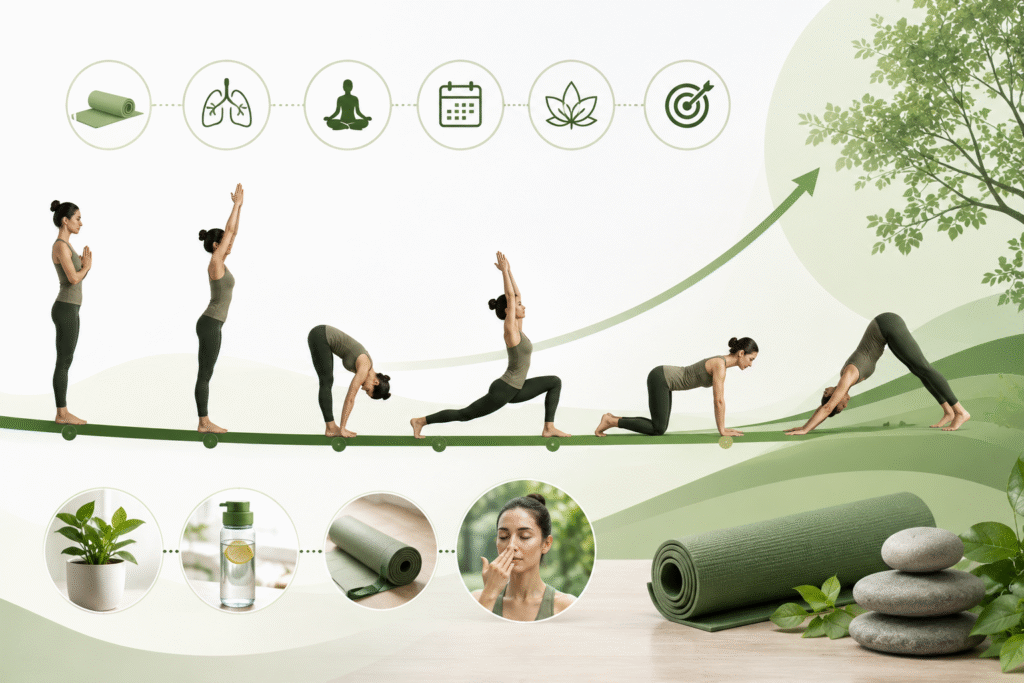
Learn the Fundamental Yoga Poses
You do not need to learn dozens of advanced poses when starting yoga.
A few foundational movements can help you develop strength, flexibility, and confidence.
Mountain Pose (Tadasana)
This simple standing posture teaches proper alignment and body awareness.
Benefits include:
- Improved posture
- Better balance
- Increased stability
Child’s Pose (Balasana)
One of the most relaxing poses in yoga.
Benefits include:
- Stress relief
- Gentle stretching
- Relaxation and recovery
Cat-Cow Stretch
A beginner-friendly movement that improves spinal mobility.
Benefits include:
- Reduced back stiffness
- Improved posture
- Better flexibility
Downward-Facing Dog
One of the most recognized yoga poses.
Benefits include:
- Full-body stretching
- Increased strength
- Improved circulation
As your confidence grows, you can gradually explore more postures and yoga sequences.
Create a Routine That Fits Your Lifestyle
One reason people struggle with fitness goals is that they choose routines that do not fit their schedules.
Yoga should work with your lifestyle, not against it.
Ask yourself:
- What time of day do I have the most energy?
- How many days can I realistically commit to?
- Where will I practice?
Some people prefer morning yoga routines because they help set a positive tone for the day.
Others enjoy evening sessions to unwind and release stress.
There is no perfect schedule.
The best routine is the one you can maintain consistently.
A simple beginner schedule might look like:
Week 1–2
15 minutes per day
Week 3–4
20 to 25 minutes per day
Month 2 Onward
30 minutes per day or guided group sessions
The goal is progress, not perfection.
Practice in Nature Whenever Possible
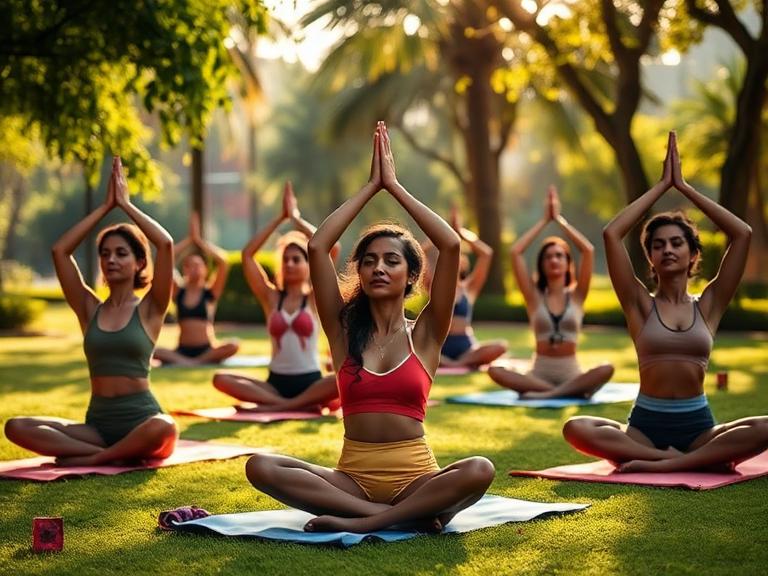
One of the easiest ways to make yoga more enjoyable is to practice outdoors.
Outdoor yoga sessions have become increasingly popular because they combine the benefits of movement with the healing effects of nature.
Natural environments provide:
- Fresh air
- Natural sunlight
- Reduced stress
- Better focus
- Enhanced mood
Many practitioners find that yoga feels more enjoyable and sustainable when practiced in parks, gardens, beaches, or open spaces.
Sunrise yoga sessions are particularly popular because they allow participants to begin the day with movement, mindfulness, and exposure to natural light.
Practicing outdoors also helps people disconnect from screens and reconnect with the present moment.
Understand That Flexibility Is Not a Requirement
One of the biggest myths about yoga is that you must already be flexible before you start.
This couldn’t be further from the truth.
Flexibility is a result of yoga, not a prerequisite.
Many beginners initially struggle with basic stretches, and that is completely normal.
Over time, consistent practice improves:
- Range of motion
- Joint mobility
- Muscle flexibility
- Balance and coordination
The goal is not to compare yourself to others.
The goal is to improve from where you are today.
Use Yoga as a Tool for Stress Management
Modern lifestyles often involve constant pressure, deadlines, and digital overload.
This is one reason yoga for stress relief and anxiety has become so popular.
Yoga combines movement, breathing, and mindfulness to create a powerful stress-management system.
Benefits include:
- Reduced cortisol levels
- Improved emotional regulation
- Better sleep quality
- Greater resilience to daily challenges
Many people begin yoga for physical fitness but continue because of the mental and emotional benefits.
Consider Joining Group Yoga Sessions
While practicing at home can be effective, many beginners benefit from joining group yoga sessions.
A supportive community can help:
- Increase accountability
- Improve consistency
- Provide guidance
- Build confidence
- Create meaningful connections
Group environments also allow beginners to learn proper techniques from experienced instructors.
For many people, the sense of community becomes an important part of their wellness journey.
Embrace Progress Over Perfection
Perhaps the most important lesson in yoga is understanding that progress matters more than perfection.
There will be days when your balance feels off.
There will be days when your body feels stiff.
There will be days when motivation is low.
This is completely normal.
Yoga is not about performing the perfect pose.
It is about showing up consistently and developing a healthier relationship with your body and mind.
Every session contributes to long-term growth.
Every breath is part of the journey.
Frequently Asked Questions (FAQs)
1. How do I start yoga as a complete beginner?
Begin with simple poses, basic breathing techniques, and short daily sessions.
2. How many minutes should beginners practice yoga?
Starting with 10 to 15 minutes daily is a great way to build consistency.
3. Do I need to be flexible before starting yoga?
No. Flexibility develops naturally through regular practice.
4. What are the easiest yoga poses for beginners?
Mountain Pose, Child’s Pose, Cat-Cow Stretch, and Downward Dog.
5. How often should beginners practice yoga?
Three to five sessions per week is ideal.
6. Can yoga help with weight management?
Yoga supports healthy habits, stress management, and overall fitness.
7. Is it better to practice yoga in the morning or evening?
Both work well. Choose the time that fits your schedule consistently.
8. Should beginners join a class or learn online?
Both options work, though guided instruction can help improve technique.
9. Can beginners participate in outdoor yoga sessions?
Yes. Outdoor yoga is suitable for all levels.
10. How long does it take to develop a yoga habit?
Most people establish a consistent routine within 4 to 8 weeks.
Final Thoughts
Starting a yoga practice does not require special abilities, expensive equipment, or years of experience.
What matters most is consistency.
By starting small, focusing on breathing, learning foundational poses, creating a realistic routine, and exploring outdoor yoga sessions, beginners can build a sustainable practice that supports both physical and mental well-being.
Whether your goal is better flexibility, improved focus, reduced stress, or greater overall wellness, yoga offers a path that can be adapted to your unique needs and lifestyle.
Remember that yoga is not about perfection. It is about progress, patience, and creating a stronger connection between your body, mind, and everyday life.
More on this topic –> Yoga for mental welness in chennai