Table of Contents
Elevator Door Operator Repair in Hyderabad | 24/7 Expert Lift Services
In high-density urban environments like Hyderabad, elevator reliability directly impacts daily operations. While passengers often focus on the elevator cab or speed, lift engineers recognize that over 70% of all elevator service calls and operational shutdowns stem directly from door system failures.
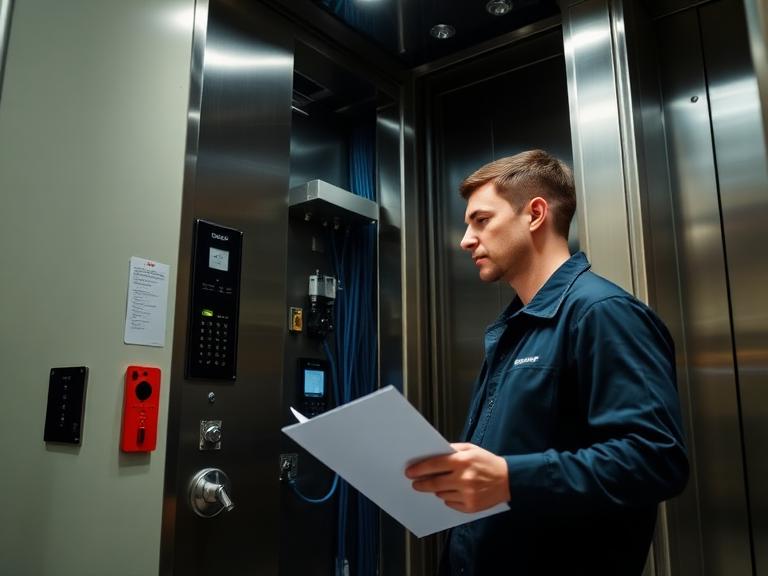
At the center of every automatic lift door setup is the elevator door operator. Positioned on the roof frame of the elevator car cab, this electromechanical assembly controls the motion, force, speed, and timing of both the inner cab doors and the outer landing doors.
When a door operator experiences mechanical drag, electrical drive breakdown, or sensor misalignment, the lift stops functioning as a basic safety precaution.
Whether managing a commercial IT tower in Hitech City, a residential complex in Gachibowli, or a retail outlet in Abids, professional elevator door operator repair in Hyderabad restores smooth, silent, and compliant lift operation.
Technical Overview: How Elevator Door Operators Function
Understanding door operator repairs requires knowing how these systems convert electronic control signals into precise mechanical movement.
+-------------------------------------------------------------------------+
|                  FOUR-PHASE DOOR MOTION PROFILE (VVVF)                  |
|                                                                         |
|   Velocity                                                              |
|      ^          +-------------------+                                   |
|      |         /                     \                                  |
|      |        /                       \                                 |
|      |       /                         \                                |
|      |      /                           \                               |
|      |     /                             \_____                         |
|      +----+------------------------------------+---> Distance           |
|           |          |                |        |                        |
|        Initial   Constant          Controlled Final                     |
|      Accelerate   Velocity         Decelerate Creep                     |
+-------------------------------------------------------------------------+
Key Components
- Door Drive Motor: Modern systems utilize Permanent Magnet Synchronous Motors (PMSM), Brushless DC (BLDC) motors, or 3-phase AC induction motors controlled by dedicated variable-frequency drives (VFD).
- Door Controller Board / VVVF Inverter: Regulates voltage, frequency, and current to deliver smooth acceleration, constant high-speed movement, deceleration, and low-speed closing curves.
- Transmission Drive: Drive belts (typically reinforced HTD toothed belts), gearboxes, or mechanical drive linkage arms transfer rotational torque into linear horizontal motion.
- Car Door Clutch (Pickup Vane): A mechanical expanding vane attached to the car door hanger. When the cab stops at a floor landing zone, the vane expands to lock onto the landing door interlock rollers, driving both sets of doors simultaneously.
- Hangers, Tracks, and Rollers: Machined steel guide rails and polyurethane-coated rollers bear panel weight while ensuring low-friction, horizontal movement.
- Safety Sensing Arrays: Full-height infrared 2D/3D light curtains, electronic overload detectors, and mechanical safety edges prevent doors from closing on passengers or objects.
Common Causes of Door Operator Failure in Hyderabad
Hyderabad’s climate and urban usage patterns place specific demands on elevator hardware.
| Operational Stressor | Local Root Cause | Affected Door Operator Component |
| High Dust Concentration | Ongoing construction work in expanding areas like Financial District, Tellapur, and Kompally. | Sill guide grooves, optical light curtain lenses, hanger roller bearings. |
| Monsoon Humidity | Excessive ambient moisture during monsoon seasons (July–October). | Electrical contacts on door interlocks, terminal wiring, PC boards. |
| Grid Voltage Fluctuations | Sudden brownouts, generator changeovers, and power surges. | Gate drive transistors, switching power supplies, VVVF drive capacitors. |
| High Daily Cycle Counts | Dense usage in commercial spaces in Madhapur and residential complexes in Kukatpally. | Toothed drive belts, motor carbon brushes, clutch link pins. |
Symptoms Requiring Professional Door Operator Repair
Property managers and maintenance teams can prevent complete elevator outages by acting on early warnings:
- Jerkiness or Shuddering During Travel: Points to worn hanger rollers, track dirt, or misconfigured motor torque parameters.
- Repeated Opening and Closing Attempts: Occurs when sensor beams are obstructed, or the controller detects excessive physical resistance from worn tracks.
- Hard Slamming at End of Travel: Indicates a failed speed profile, a damaged encoder, or missing rubber deceleration stops.
- Scraping or Screeching Sounds: Signals metal-on-metal friction between the door clutch and interlock rollers, or failing roller bearings.
- Slow, Sluggish Movement: Usually caused by motor thermal degradation, low line voltage, or failing drive capacitors.
Step-by-Step Technical Repair Process
Qualified technicians follow systematic diagnostic protocols to resolve elevator door operator failures:
Phase 1: Safety Isolation & Mechanical Assessment
+-------------------------------------------------------------------+
|                     PHASE 1 DIAGNOSTIC WORKFLOW                   |
+-------------------------------------------------------------------+
|  1. Engage Inspection Mode & Lock Out Power                      |
|  2. Inspect Sill Grooves for Debris and Structural Wear           |
|  3. Check Alignment of Hanger Sheaves, Tracks, and Rollers        |
|  4. Inspect Toothed Belt Tension and Tooth Geometry Integrity     |
+-------------------------------------------------------------------+
- Step 1: The technician switches the lift controller to Inspection Mode, isolates power to the car drive, and secures the hoistway entrance.
- Step 2: They check the bottom sill grooves, removing debris that causes mechanical binding.
- Step 3: The alignment of top hanger sheaves, track rails, and eccentric anti-tipping rollers is measured using precision levels and gauges.
- Step 4: Drive belt tension is tested to ensure it meets manufacturer deflection standards, preventing drive slipping.
Phase 2: Electrical & Electronic System Diagnostics
- Step 1: Multimeter readings verify incoming supply voltage stability.
- Step 2: Handheld diagnostic tools interface with the VVVF door controller board to read historical fault codes (e.g., motor overcurrent, encoder communication loss, obstacle trip errors).
- Step 3: Infrared light curtain arrays are calibrated for signal strength and alignment across the full entrance height.
- Step 4: Door lock contact continuity and car-to-landing clutch clearance (typically maintained at 4mm to 6mm) are verified.
Phase 3: Component Replacement & Calibration
+-------------------------------------------------------------------+
|                 PHASE 3 REPAIR & REPROGRAMMING WORKFLOW           |
+-------------------------------------------------------------------+
|  1. Replace Worn Parts (Rollers, Belts, Bearings, Control Boards) |
|  2. Execute Self-Learning Shaft Cycle on VVVF Controller          |
|  3. Set Motion Curves (Acceleration, Deceleration, Creep Speed)  |
|  4. Validate Kinetic Energy Limits (EN 81-20 / IS 14665 Standards)|
+-------------------------------------------------------------------+
- Step 1: Worn rollers, frayed drive belts, failing motors, or burnt circuit boards are replaced with genuine OEM or certified compatible components.
- Step 2: The controller performs a Self-Learning / Travel Auto-Tune Cycle to measure door width and panel weight inertia.
- Step 3: Technicians fine-tune acceleration curves, creep speeds, and holding torque.
- Step 4: Reopening sensitivity and kinetic force limits are verified against IS 14665 and EN 81-20 standards (ensuring maximum closing kinetic energy stays below 1.5 Joules).
Door Operator Modernization vs. Spot Repairs
Building owners often evaluate whether to repair individual failing parts or replace the entire door operator assembly with a modern unit.
+------------------------------------------------------------------------+
|                     REPAIR VS. MODERNIZATION COST                      |
|                                                                        |
|   Cost (₹)                                                             |
|     ^                                              [ Full Kit ]        |
|     |                                              [ Modernization ]   |
|     |                                              [ ₹25k - ₹65k ]     |
|     |                                                   |              |
|     |                    [ Major Repair ]               |              |
|     |                    [ (Drive/Motor) ]              |              |
|     |                    [ ₹5k - ₹18k ]                 |              |
|     |   [ Minor Repair ]       |                        |              |
|     |   [ ₹1.5k - ₹3.5k ]      |                        |              |
|     +----------------------------------------------------------->      |
|         Spot Fix            Overhaul                Modernize          |
+------------------------------------------------------------------------+
When Spot Repairs Are Ideal
- The overall operator mechanism is less than 8–10 years old.
- Faults are limited to consumable items like belts, rollers, or dirty sensors.
- Replacement parts for the existing operator model are readily available in local Hyderabad inventory.
When Modernization / Retrofitting Is Recommended
- The system uses legacy mechanical arm linkages or obsolete DC resistance controllers.
- Spare parts are discontinued by the original manufacturer.
- The door operator causes frequent lift outages, leading to tenant complaints or high ongoing repair costs.
- A modernization retrofit installs a compact, energy-efficient VVVF door operator kit with an integrated encoder, delivering smooth performance and long-term serviceability.
Service Coverage Across Hyderabad & Secunderabad
Local repair teams serve all major commercial, residential, and industrial corridors throughout the Greater Hyderabad region:
Western Tech Corridor
- Locations: Hitech City, Gachibowli, Madhapur, Kondapur, Financial District, Nanakramguda, Raya Durg.
- Primary Application: High-speed commercial office elevators, IT park towers, and premium high-rise residential apartments requiring rapid response times.
Central Commercial Hubs
- Locations: Banjara Hills, Jubilee Hills, Begumpet, Punjagutta, Abids, Himayatnagar.
- Primary Application: Retail centers, boutique hotels, hospitals, and commercial complexes with frequent daily door usage.
Northern & Eastern Residential Belts
- Locations: Kukatpally, KPHB Colony, Miyapur, Bachupally, Kompally, Secunderabad, AS Rao Nagar, Uppal.
- Primary Application: Multi-story residential apartments, gated communities, and mixed-use commercial buildings.
Southern Industrial Belts
- Locations: Kattedan, Cherlapally, Patancheru, Shamshabad.
- Primary Application: Heavy-duty goods and freight elevator door operators requiring high-torque motor configurations.
Frequently Asked Questions (FAQs)
1. What is an elevator door operator and why does it break down?
The elevator door operator is the motorized mechanism mounted on top of the car cab that controls the opening and closing of both cab doors and landing doors. Breakdowns typically occur due to mechanical friction, worn drive belts, dust in track grooves, power surges, or controller board component degradation.
2. How quickly can a repair technician arrive at my location in Hyderabad?
For emergency calls involving trapped passengers or high-traffic commercial buildings, emergency service teams can reach major hubs like Hitech City, Gachibowli, Banjara Hills, and Secunderabad within 30 to 60 minutes.
3. Why do my elevator doors open and close repeatedly without moving the lift?
This issue is commonly caused by a blocked or misaligned infrared light curtain sensor, excessive debris in the floor sill track, or an improperly adjusted torque limit setting on the door inverter controller.
4. Can technicians repair door operators for all elevator brands?
Yes, multi-brand technicians service door operators across all major OEM and non-proprietary manufacturers, including Otis, Schindler, Kone, Thyssenkrupp (TK Elevator), Mitsubishi, Monarch, Fermator, and Wittur.
5. What are the typical repair costs for an elevator door operator in Hyderabad?
Minor repairs (cleaning, belt tensioning, sensor realignments) range from ₹1,500 to ₹3,500. Major motor or electronic board repairs cost between ₹5,000 and ₹18,000, while complete VVVF door operator modernization kits range from ₹25,000 to ₹65,000 depending on cab size and door type.
6. What causes grinding or screeching noises during door movement?
Grinding sounds typically stem from worn polyurethane hanger rollers, dry bearings, accumulated debris in the sill groove, or a misaligned car door clutch scraping against the landing door interlock frame.
7. Is complete replacement necessary if the door motor stops running?
Not always. Many issues can be resolved by replacing carbon brushes, rectifiers, drive capacitors, or repairing the VVVF control circuit board at a lower cost than a full assembly replacement.
8. What is the structural difference between center-opening and telescopic doors?
Center-opening doors feature two panels moving outward from the middle in opposite directions. Telescopic doors feature panels sliding in the same direction, stacking behind one another to maximize entrance width in compact hoistways.
9. How does Hyderabad’s local climate affect door operator equipment?
High ambient summer temperatures bake roller bearing grease and stress drive electronics, while airborne dust from construction clogs optical sensors and accelerates belt wear. Monsoon humidity can cause surface oxidation on electrical door interlock contacts.
10. How long does a standard door operator repair take?
Routine adjustments, sensor realignments, or drive belt replacements are completed within 1 to 2 hours. Motor rewinds, circuit repairs, or mechanical overhauls take approximately 4 to 8 hours.
11. What safety standards apply to elevator door repairs in Telangana?
Elevator door repairs and modernizations must comply with IS 14665 (Indian Standard for Electric Traction Lifts) and updated National Building Code (NBC) standards regarding kinetic energy limits during closing, obstruction detection times, and light curtain functionality.
12. What causes elevator doors to slam shut forcefully at the end of travel?
Hard closing indicates that the deceleration profile or low-speed creep zone setting on the drive inverter has drifted out of calibration, or that the motor’s position feedback encoder has failed.
13. Can an old mechanical arm door operator be upgraded to a modern VVVF system?
Yes, legacy mechanical or AC single-speed operators can be retrofitted with a modern VVVF door operator conversion kit, resulting in smoother, quieter, and more reliable door movement.
14. What is a door clutch and how does it engage landing doors?
The door clutch (or pickup vane) is an expanding mechanical assembly mounted on the car door. When the car lands at a floor, the clutch expands to grab the landing door interlock rollers, allowing the motorized car door to open both sets of doors in sync.
15. How frequently should door operators undergo preventive maintenance?
In high-density commercial office towers and residential complexes across Hyderabad, door operators should be inspected, cleaned, lubricated, and calibrated monthly to prevent sudden equipment failures.
Conclusion & Actionable Maintenance Checklist
Maintaining smooth, reliable elevator door operation requires combining responsive repair services with routine preventive maintenance. Property owners and facility managers across Hyderabad can use this operational checklist to ensure long-term reliability: