
Table of Contents
Legacy System Integration Services | Mainframe & Cloud | Sandhata
Across global banking, insurance, telecommunications, healthcare, and government sectors, established enterprises rely on mission-critical core systems built decades ago. IBM Z mainframes, IBM i (AS/400) platforms, on-premises Oracle databases, and monolithic Enterprise Resource Planning (ERP) suites quietly process trillions of dollars in daily transactions, manage millions of customer policies, and execute core operational ledgers with proven reliability.
However, while these core legacy platforms excel at high-volume transaction stability, they were never designed to communicate natively with modern cloud microservices, smartphone apps, real-time analytics engines, or Open Banking partner ecosystems.
When customer data and core business rules remain locked inside legacy systems accessible only via green-screen terminals or overnight batch file transfers, digital transformation stalls. Launching a simple mobile app feature or connecting a modern cloud customer relationship platform requires months of brittle custom coding, overloads expensive mainframe processing capacity (MIPS), and creates severe operational risks.
At the same time, attempting a full “rip-and-replace” migration of core legacy systems is notoriously hazardous—frequently resulting in multi-year delays, massive budget overruns, and catastrophic business disruptions.
Legacy System Integration Services offer a proven, low-risk path forward. Rather than discarding reliable core systems, modern integration engineering wraps legacy business logic inside secure RESTful APIs, streams real-time database changes into cloud event platforms, and connects hybrid topologies seamlessly—unlocking digital agility without compromising core stability.
This comprehensive guide explores why legacy connectivity bottlenecks slow enterprise innovation, the six architectural pillars of modern legacy integration, and how Sandhata Technologies helps global enterprises bridge legacy foundations with cloud speed.
Section 1: Why Disconnected Legacy Systems Stall Digital Transformation
Understanding the technical friction between core legacy systems and modern cloud architectures is essential for designing a resilient hybrid strategy.
1.1 Proprietary Protocols and Fixed-Length Data Structures
Modern cloud applications exchange flexible, variable-length JSON payloads over standard HTTP REST or Kafka protocols encoded in UTF-8. In contrast, legacy mainframe and midrange platforms rely on specialized protocols—such as CICS channels, IMS transactions, IBM MQ messages, and SNA terminals—processing strict, positional COBOL copybooks encoded in EBCDIC.
Because modern cloud developers rarely possess deep legacy mainframe expertise, bridging these two worlds without clean abstraction layers leads to slow development cycles, silent data truncation errors, and fragile custom connectors.
1.2 Slow Overnight Batch Processing vs. Real-Time Digital Expectations
Historically, legacy systems shared data with external applications through scheduled overnight batch jobs that exported flat files via FTP.
In today’s always-on digital economy, customers expect instant balance updates, real-time loan approvals, and immediate order confirmations. Relying on twenty-four-hour batch cycles leaves cloud portals displaying stale data and prevents organizations from delivering real-time digital experiences.
1.3 Escalating Mainframe MIPS Costs from Unoptimized Cloud Queries
When organizations connect high-traffic mobile apps directly to core mainframes using naive request-response calls, every customer screen refresh triggers repetitive read queries against the mainframe.
Because mainframe computing power is billed based on peak Millions of Instructions Per Second (MIPS) usage, uncached mobile traffic causes mainframe infrastructure costs to skyrocket while risking performance degradation during peak business hours.
1.4 Brittle Point-to-Point Scripts and Aging Enterprise Service Buses
Over decades, many organizations accumulated thousands of undocumented point-to-point scripts or overloaded monolithic Enterprise Service Buses (ESBs) to link legacy databases with newer departmental apps. Upgrading any single component breaks dozens of hidden dependencies, trapping IT teams in high-cost maintenance.
Section 2: Core Engineering Pillars of Sandhata’s Legacy System Integration Services
Sandhata Technologies brings over two decades of specialized hybrid mainframe, middleware, and cloud integration expertise to help global enterprises unlock legacy value across six foundational pillars.
2.1 Pillar 1: Non-Invasive API Enablement and z/OS Connect Gateways
Sandhata unlocks core legacy transactions without rewriting proven COBOL or RPG business logic. Using modern API gateways—such as IBM z/OS Connect Enterprise Edition, CICS web services, and API management platforms—Sandhata wraps legacy mainframe and ERP routines inside standardized, self-documenting RESTful APIs.
Cloud and mobile developers consume core banking ledgers, customer master records, and policy engines using clean JSON payloads, while automated gateway adapters handle EBCDIC-to-UTF-8 translation and copybook mapping transparently.
2.2 Pillar 2: Real-Time Change Data Capture (CDC) and Kafka Event Streaming
To eliminate slow overnight batch files without overloading core legacy CPUs, Sandhata implements real-time Change Data Capture (CDC) pipelines connected to Apache Kafka and cloud event buses.
CDC tools monitor transaction logs directly inside legacy DB2, IMS, VSAM, or Oracle databases, capturing every insert, update, and delete the millisecond it commits. These changes stream immediately as lightweight events into cloud read stores, search indexes, and analytical platforms—serving high-volume digital read queries from the cloud while cutting expensive mainframe MIPS consumption.
2.3 Pillar 3: Hybrid Messaging Bridges (IBM MQ to Cloud Event Brokers)
Asynchronous messaging forms the resilient backbone of enterprise integration. Sandhata engineers seamless messaging bridges connecting legacy IBM MQ topologies with modern cloud streaming platforms such as Apache Kafka, AWS EventBridge, and Azure Service Bus—ensuring guaranteed message delivery, strict transaction ordering, and automated dead-letter error recovery across hybrid boundaries.
2.4 Pillar 4: Phased Modernization Using the Strangler Fig Architecture
When organizations plan to gradually replace aging legacy modules with cloud-native microservices, Sandhata applies the Strangler Fig Pattern.
By placing an intelligent API routing layer in front of the legacy system, Sandhata routes specific business functions—such as customer profile updates or quoting calculations—to newly built cloud microservices while keeping core accounting ledgers on the mainframe. Teams migrate capabilities incrementally at low risk with zero customer downtime.
2.5 Pillar 5: Automated Hybrid Testing and Mainframe Service Virtualization
Connecting cloud platforms with legacy systems requires rigorous cross-platform validation. Sandhata pairs integration engineering with automated Mainframe Integration Testing and Service Virtualization.
Service Virtualization simulates legacy mainframe CICS transactions and IBM MQ queues inside lightweight cloud containers, allowing cloud squads to test continuously without waiting for scarce mainframe testing partitions (LPARs) or burning MIPS. Simultaneously, Sandhata’s proprietary ATOM2 hyperautomation platform validates end-to-end data integrity across cloud UIs, middleware buses, and backend mainframe databases.
2.6 Pillar 6: Zero-Trust Security Governance and Regulatory Audit Trails
Exposing core legacy systems to digital channels requires uncompromising security. Sandhata implements Zero-Trust API gateways enforcing OAuth 2.0 and OpenID Connect authentication, mutual TLS encryption, fine-grained role-based access control, rate-limit throttling to protect legacy systems from traffic floods, and immutable audit logs required under DORA, FCA/PRA rules, PCI-DSS, and HIPAA.
Section 3: Evaluating Legacy Integration Maturity with the Maturity Compass
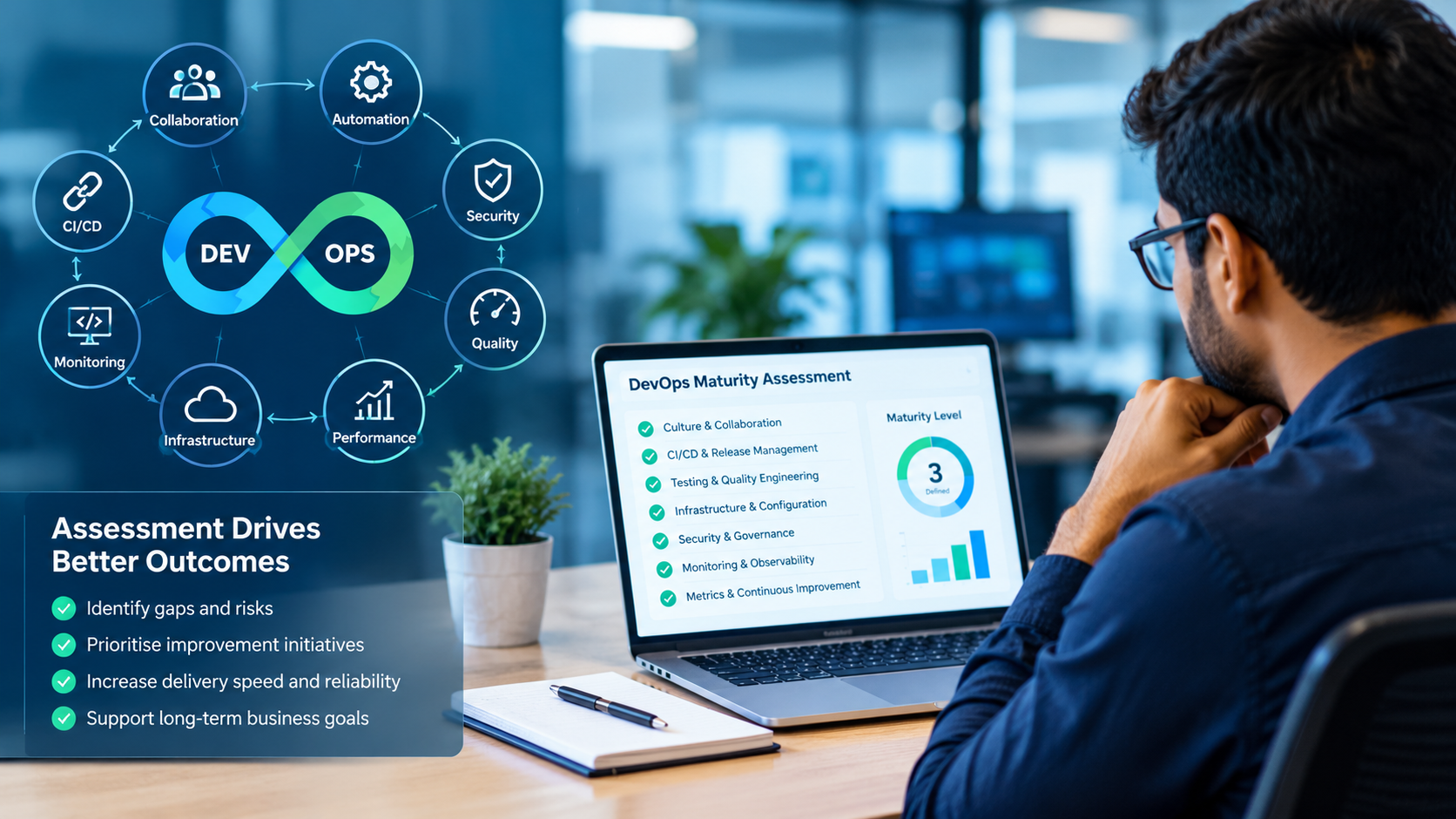
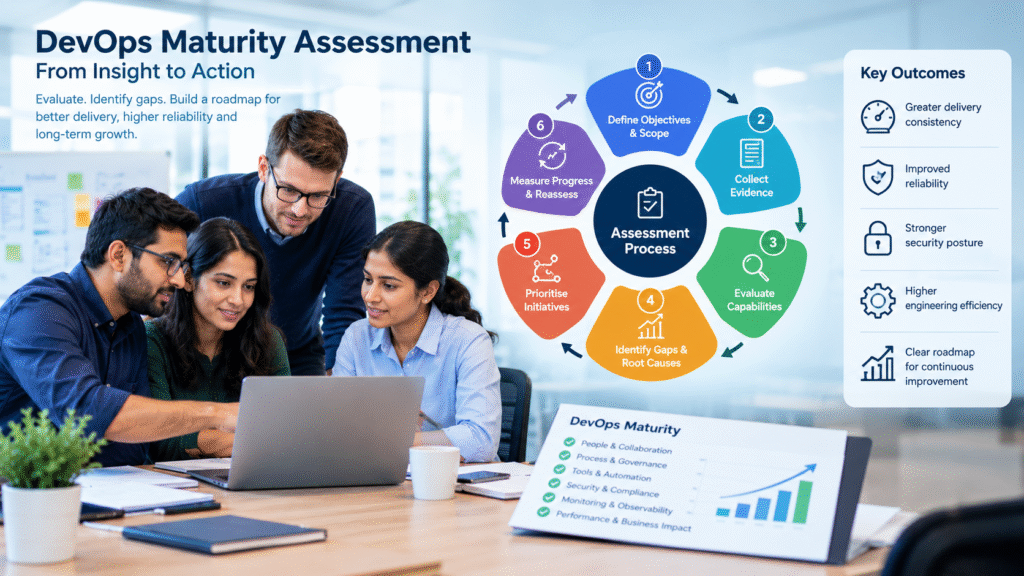
Sandhata applies the proprietary DevOps & SRE Maturity Compass to help technology leaders benchmark their legacy connectivity and hybrid modernization readiness across 30 to 40 technical and operational dimensions.
Level 1: Isolated Legacy Silos and Overnight Batching. Core mainframes and ERPs operate behind closed walls, exchanging data via overnight flat-file transfers and undocumented point-to-point scripts. Digital initiatives take months to integrate, and data is frequently out of sync.
Level 2: Basic Screen-Scraping and Monolithic ESB Connectors. Teams rely on fragile terminal screen-scraping macros or a heavy central ESB to reach legacy systems. Cloud traffic spikes overload legacy CPUs, and testing requires scarce shared LPAR windows.
Level 3: API-Enabled Core and Real-Time Event Streaming. Standardized z/OS Connect APIs and Change Data Capture pipelines expose legacy transactions and real-time data to cloud microservices cleanly. Cloud caching reduces mainframe MIPS costs, and Service Virtualization decouples testing.
Level 4: Autonomous Hybrid Ecosystem and Strangler Fig Agility. Cloud-native microservices and core legacy systems operate as a unified, event-driven mesh. Automated contract testing, ATOM2 hyperautomation, and Zero-Trust API policies enable rapid, continuous releases across hybrid estates with zero downtime.
The Maturity Compass gives executive leadership objective benchmark scores and a clear, phased roadmap for legacy integration.
Section 4: Enterprise Impact – Real-World Legacy Integration Case Studies
Case Study 1: Tier-1 Global Retail Bank Unlocks Mainframe Core for Digital Banking
A leading global retail bank held twenty million customer accounts on an IBM Z mainframe while building new cloud mobile banking and Open Banking APIs. Slow batch synchronization, brittle ESB connectors, and uncached mobile queries drove up mainframe MIPS bills and delayed digital product launches by four months.
Sandhata deployed a team of Enterprise Integration Architects and Mainframe Engineers to deliver Legacy System Integration Services. Sandhata implemented z/OS Connect REST API gateways, deployed real-time Change Data Capture streaming from mainframe DB2 to cloud read stores via Apache Kafka, and virtualized mainframe endpoints for cloud CI/CD pipelines.
Mobile app data latency dropped from overnight batch delays to under two hundred milliseconds. Offloading repetitive read queries to cloud replicas reduced mainframe MIPS consumption by thirty-four percent, integration delivery speed accelerated by seventy-five percent, and API reuse exceeded eighty percent.
Case Study 2: Major European Insurance Carrier Modernizes Policy Administration Without Downtime
A prominent insurance carrier operated a thirty-year-old AS/400 and mainframe policy administration system that slowed down online quoting and partner broker integrations. A full replacement was projected to take five years and carry severe operational risk.
Sandhata architected a Strangler Fig integration strategy combining API-led connectivity, IBM MQ messaging bridges, and automated dual-run hybrid testing powered by Sandhata’s ATOM2 platform.
The carrier launched modern digital broker APIs in just ten weeks, gradually migrated quoting and claims modules to AWS microservices with zero customer disruption, and cut integration maintenance costs by forty-five percent.
Section 5: Essential Metrics for Legacy System Integration Success
Measuring the strategic return on investment of Legacy System Integration Services requires tracking objective operational metrics across agility, cost efficiency, data freshness, and reliability:
Integration Delivery Lead Time: Measuring total elapsed time required to expose a legacy business function or dataset to modern digital channels, reduced from months to weeks.
Mainframe MIPS Consumption Reduction: Quantifying infrastructure savings achieved by offloading repetitive read traffic to cloud event replicas and API caching layers.
Data Synchronization Latency: Measuring the transition from twenty-four-hour overnight batch files to sub-second real-time event streaming via Change Data Capture.
Reusable API Adoption Rate: Tracking the percentage of legacy System APIs reused across multiple mobile, web, and partner initiatives, targeted above 75 percent.
Hybrid System Availability and Error Rate: Measuring end-to-end transaction uptime (targeted above 99.99 percent) and eliminating data translation failures across legacy boundaries.
Section 6: Frequently Asked Questions (FAQs)
FAQ 1: What are Legacy System Integration Services?
Legacy System Integration Services are specialized architectural and engineering solutions that connect established, mission-critical core systems—such as IBM Z mainframes, AS/400 servers, and on-premises ERP databases—with modern cloud applications, mobile channels, and SaaS platforms without disrupting core operations.
FAQ 2: Why should enterprises integrate legacy systems rather than immediately replacing them?
Core legacy systems process millions of daily financial transactions, insurance policies, and customer records with unmatched reliability. Rip-and-replace migrations carry extreme cost, schedule overruns, and outage risks. Integration unlocks legacy data and logic safely via modern APIs while enabling gradual, low-risk modernization.
FAQ 3: How does API enablement unlock legacy mainframe capabilities?
Using gateways such as IBM z/OS Connect and CICS web services, Sandhata wraps legacy COBOL programs and mainframe transactions inside standardized, secure RESTful APIs. Cloud and mobile developers consume mainframe services using modern JSON payloads without needing specialized mainframe programming skills.
FAQ 4: What is Change Data Capture (CDC) and how does it help legacy integration?
Change Data Capture reads transaction logs directly from legacy databases like DB2, IMS, or Oracle and streams data updates in real time to cloud event platforms like Apache Kafka. This eliminates slow overnight batch file transfers and keeps cloud applications synchronized without overloading core systems.
FAQ 5: How does Legacy System Integration reduce mainframe MIPS costs?
By streaming real-time data changes to cloud read replicas and introducing intelligent API caching layers, modern integration architectures serve high-volume mobile and web read queries from the cloud rather than repeatedly querying core mainframes, cutting expensive MIPS consumption.
FAQ 6: What data translation challenges occur when connecting legacy systems to the cloud?
Legacy systems store data in fixed-length COBOL copybooks encoded in EBCDIC, whereas cloud microservices use variable-length UTF-8 JSON payloads. Sandhata engineers automated translation and validation layers that prevent field truncation, character corruption, and decimal rounding errors.
FAQ 7: How does Sandhata modernize aging Enterprise Service Buses (ESBs)?
Sandhata decomposes heavy, monolithic legacy ESBs into lightweight, cloud-native microservices and containerized integration runtimes connected via modern API gateways and event brokers, eliminating central bottlenecks and licensing lock-in.
FAQ 8: What is the Strangler Fig pattern in legacy system modernization?
The Strangler Fig pattern places a modern API routing layer in front of a legacy system, allowing teams to gradually replace individual legacy functions with new cloud microservices over time while legacy and cloud components coexist seamlessly.
FAQ 9: How does Service Virtualization support Legacy System Integration projects?
Service Virtualization simulates legacy mainframe CICS transactions and IBM MQ queues in lightweight cloud containers, enabling cloud development squads to build and test integrations continuously without waiting for scarce mainframe testing partitions (LPARs).
FAQ 10: How does Sandhata ensure security and regulatory compliance when exposing legacy systems?
Sandhata enforces Zero-Trust API gateways with OAuth 2.0 authentication, mutual TLS encryption, role-based access controls, rate-limit throttling, and immutable transaction audit trails required by DORA, FCA/PRA rules, PCI-DSS, and HIPAA.
FAQ 11: What role does Sandhata’s ATOM2 platform play in legacy integration?
Sandhata’s ATOM2 hyperautomation platform accelerates hybrid quality assurance by automating end-to-end validation across modern cloud web interfaces, middleware message buses, and legacy 3270 or DB2 mainframe backends.
FAQ 12: Can Legacy System Integration handle asynchronous messaging like IBM MQ?
Yes. Sandhata bridges legacy IBM MQ messaging topologies with modern cloud event platforms like Apache Kafka and AWS/Azure messaging services, guaranteeing reliable message delivery, ordering, and dead-letter recovery.
FAQ 13: What key metrics measure the ROI of Legacy System Integration Services?
Key metrics include Integration Delivery Lead Time, Mainframe MIPS Cost Reduction, Real-Time Data Latency (replacing overnight batch jobs), API Reuse Rate, and Hybrid System Uptime.
FAQ 14: How does Sandhata assess an organization’s legacy integration readiness?
Sandhata applies the proprietary DevOps & SRE Maturity Compass alongside deep architectural audits to evaluate legacy interfaces, data bottlenecks, middleware scalability, and security governance across 30 to 40 technical criteria.
FAQ 15: How long does a Legacy System Integration engagement take with Sandhata?
Initial architectural assessments and roadmap design take 2 to 4 weeks. Implementing API enablement gateways, real-time Change Data Capture pipelines, and automated hybrid test suites delivers measurable business agility within 8 to 12 weeks.
Strategic Recommendation and Next Steps
Allowing mission-critical core systems to remain isolated behind slow overnight batch files, rigid COBOL copybooks, and aging monolithic service buses prevents enterprise organizations from realizing the full speed of cloud and digital investments. Conversely, attempting risky rip-and-replace migrations threatens core business stability.
Legacy System Integration Services provide a proven, evolutionary bridge between trusted core systems and modern cloud agility. By wrapping legacy business logic in secure RESTful APIs, streaming real-time database updates via Change Data Capture and Kafka, reducing mainframe MIPS through cloud caching, and automating hybrid validation, organizations unlock rapid digital innovation with zero operational disruption.
Sandhata Technologies brings over two decades of proven engineering excellence in hybrid mainframe integration, middleware modernization, and quality automation across heavily regulated global industries.
Contact Sandhata’s Legacy Integration Architects today to schedule your DevOps & SRE Maturity Compass Assessment and unlock your core enterprise systems for modern digital agility.




Leave a Comment
You must be logged in to post a comment.